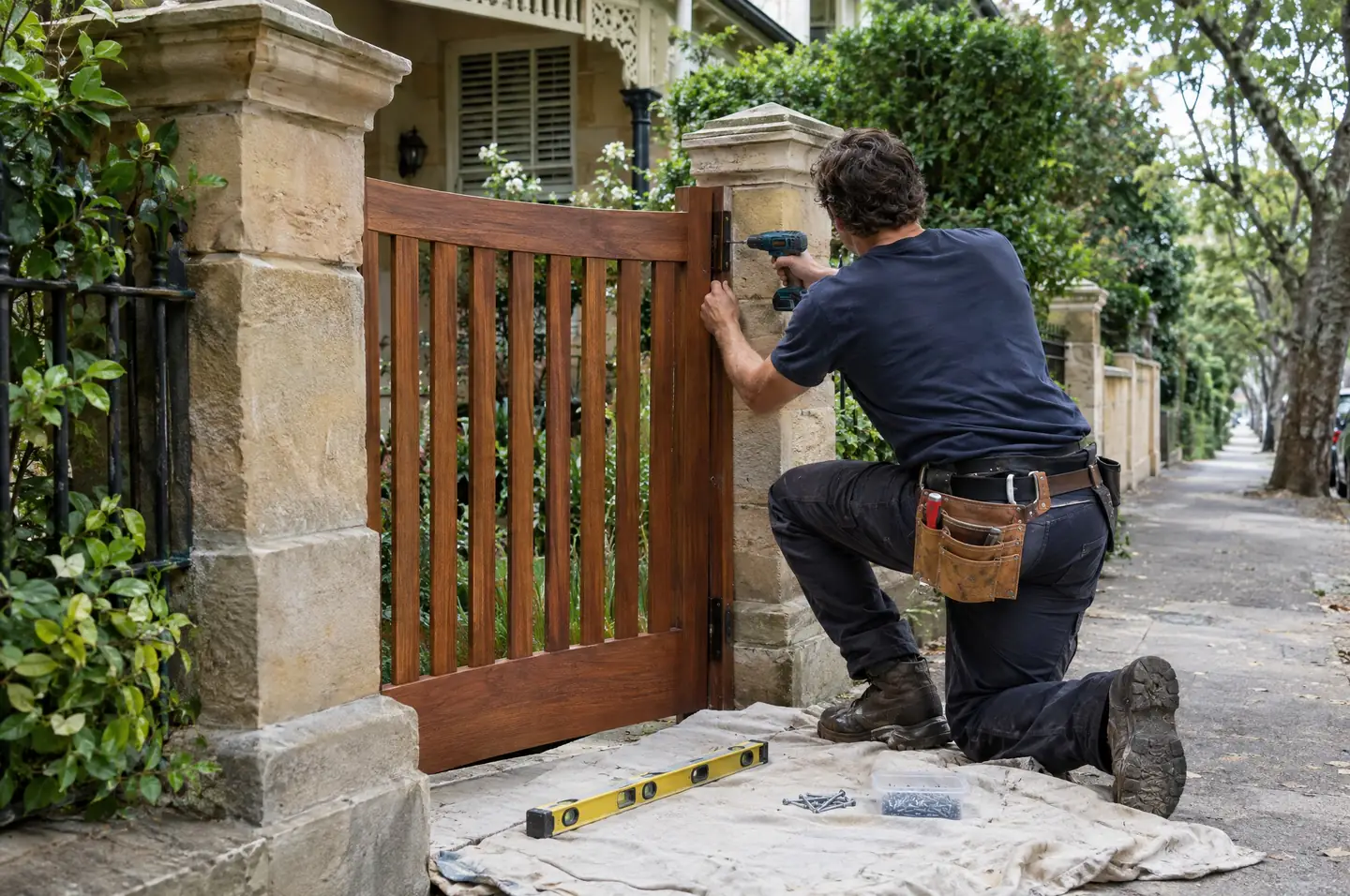
About general handyman
A general handyman does the small repairs and improvements that fall between trades: hanging doors and gates, fixing flyscreens and fly doors, patching plaster, replacing rotten fascia boards, re-fixing loose decking, sealing around windows, assembling and anchoring furniture, mounting shelves and hooks. The best use of a visit is a list. Bundling several jobs into a half or full day costs less per task than separate call-outs and means the tradie arrives with the right fixings. Post the list with photos and let the handyman tell you what is sensible to do in one go and what needs a specialist.
Houses here are old, close to salt or both, and that shows up in the work. Sea air on the Northern Beaches and around Bondi and Bronte rusts standard screws and hinges in a few seasons, so a careful handyman fits stainless or hot-dipped galvanised hardware. Timber swells in humid weather, so doors stick in summer. Federation houses in Mosman and Lindfield have picture rails, lath and plaster and lime mortar that need gentler fixings than a modern wall. Houses from before 1990 may have asbestos cement eaves or fibro sheeting, and paint from before 1970 is likely to contain lead.
The licence line in NSW sits at 5,000 dollars: residential building work above that figure (labour plus materials, GST in) needs a contractor licence, while electrical, plumbing, gasfitting and air-conditioning count as licensed trades at any size of job. Most handyman work sits under the threshold and outside those trades, so vetting is what you rely on. Here the checks are identity against an active ABN, a public liability policy that is current, recent jobs in these suburbs backed by two references, and a signed-up commitment to written quotes and the code of conduct.
What the job usually includes
How it works
- Tell us the listWrite out every job, however small, and add a photo of each. Say what the walls are made of if you know, whether there is parking or lift access, and when you are home. A clear list lets the handyman quote for a block of time rather than guessing at each item.
- We match vetted local handymenWe send your list to handymen in the network who work in your suburb, each of whom has shown us ID matched to an active ABN, a public liability certificate, recent job photos and references. Matching is free for homeowners and you are under no obligation to hire.
- They quote you directly in writingThe handyman calls or messages to confirm details, then quotes under their own ABN. Expect either an itemised list or an hourly or half-day rate with materials listed. Anything that turns out to need an electrician, plumber or licensed builder should be flagged rather than quoted.
- The workA good handyman arrives with the fixings for your wall types, protects floors and furniture with drop sheets, uses dust extraction when drilling masonry, checks for cables and pipes before cutting into walls and stops if they suspect asbestos or lead paint. Offcuts and packaging leave with them unless you have agreed otherwise.
- After the jobWalk the list together, test each door, lock and fixing, and keep the invoice. If anything was left for another trade, you have the detail to post that job separately. Then tell us how the visit went; feedback after every match decides who stays in the network.
Knowing the limits is the mark of a good handyman
The difference between careful and careless handyman work is usually in what happens before the drill starts. A good tradie asks what the wall is: double brick, brick veneer, plasterboard on studs, lath and plaster, or aerated concrete panel each take different anchors, and a shelf on the wrong plug falls down with a load on it. They find cables and pipes with a detector, drill with extraction, and choose fixings that will not streak rust down a rendered wall near the beach. On a pre-1990 house they treat fibro eaves and sheet walls as asbestos until proven otherwise and will not cut, sand or drill them.
They also know where their work ends. Moving a power point, extending a circuit, plumbing a new tap or shifting a gas bayonet are licensed trades in NSW at any value, and no amount of competence changes that. Structural work, such as cutting a joist or altering a load-bearing wall, needs a licensed builder once it is over the 5,000 dollar threshold and often council approval as well. A handyman who says so plainly, and leaves those items off the quote, is protecting you. One who says it is fine, nobody checks, is the one to avoid.
Questions worth asking the tradie
Frequently asked questions
Not for most small jobs. A contractor licence applies to residential building work valued over 5,000 dollars with GST, and specialist trades such as electrical and plumbing need one at any value. Below that line and outside those trades, no licence applies, which is why ID, ABN, insurance and references are what we check.
Anything electrical, including moving or adding power points and lights; plumbing, gas and air-conditioning work; and building work over the licence threshold such as structural changes. They can hang doors, fix hardware, patch, seal, mount, assemble and replace like-for-like timber and trim.
Walk through the house with your phone and photograph each problem, noting the room and what you would like done. Group by area so the handyman can plan. Mention wall types, access, parking and whether pets will be home. A clear list gets a clearer quote.
Usually. Every tradie's day has a minimum call-out and travel in it, so ten small jobs in a half day cost less per job than ten separate visits. The handyman quotes in writing before starting, so you can compare a block rate against itemised pricing.
Asbestos cement in eaves, fibro walls, wet area linings and old roof sheeting, which must not be drilled, cut or sanded. Paint from before 1970 usually contains lead, so sanding needs wet methods and containment. A careful handyman stops and advises if they suspect either.
Not for work inside your lot, such as shelves, doors and internal repairs. Anything on common property, which usually includes external walls, balcony balustrades, windows and front doors, needs the owners corporation's consent, which usually goes through the strata manager. Say the home is strata when you post the job.