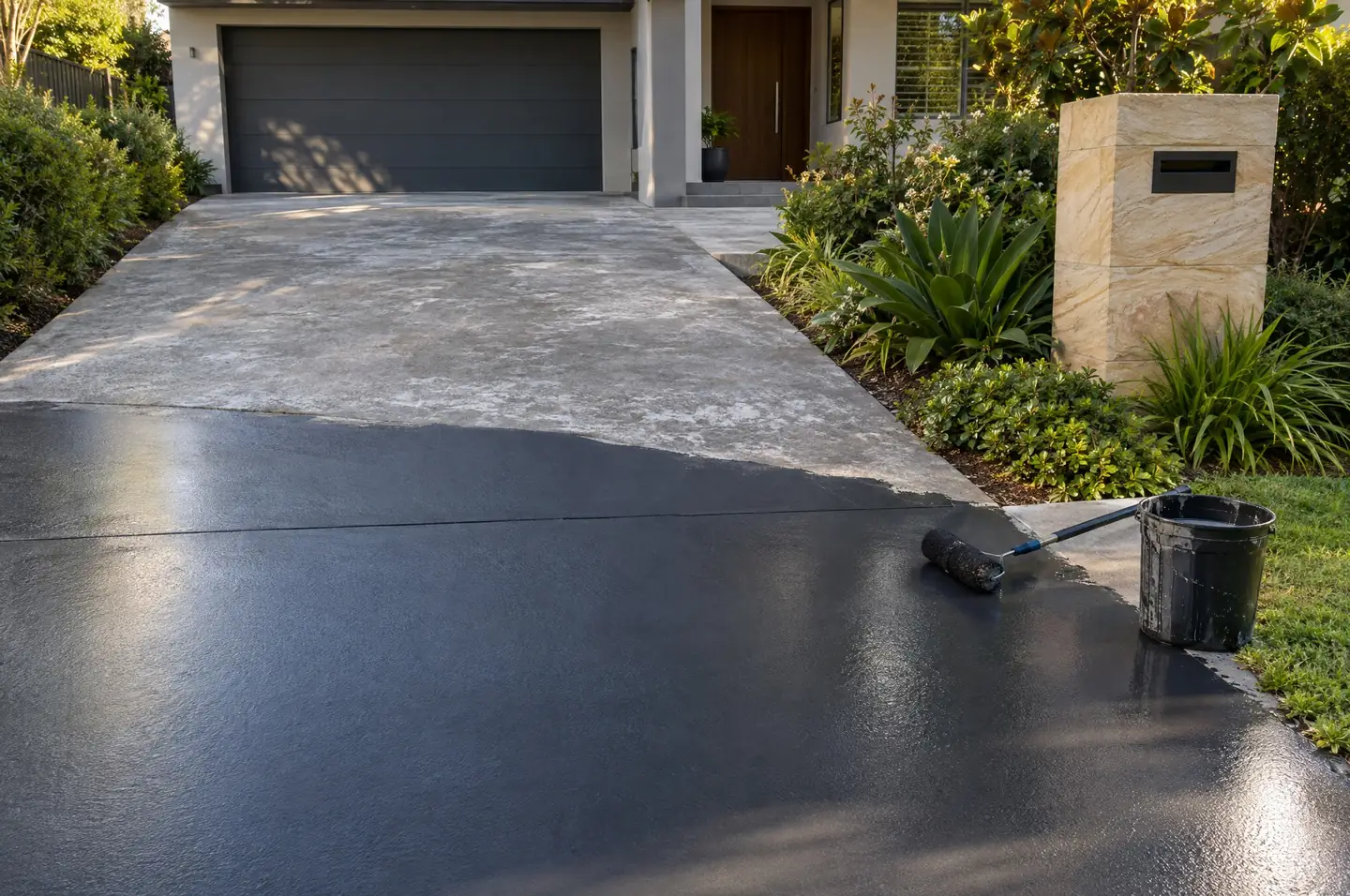
About driveway & concrete sealing in these suburbs
Driveways and hard surfaces in these suburbs take a beating. Steep concrete drives in Seaforth, Clontarf and Mosman carry tyre loads on a slope and grow moss in the shade. Newer homes in Dee Why and Lindfield with exposed aggregate pick up oil and tyre marks. Coloured concrete fades under strong northern sun. Sandstone paving and pool surrounds from Vaucluse to Avalon Beach soak up salt, chlorine and tannin from leaf litter. Sealing, done after a thorough clean, slows all of that down. The jobs posted: a first seal on fresh concrete, a reseal where the old coat has worn or peeled, stain removal, and anti-slip treatments.
Preparation decides the result. The surface is cleaned with the right pressure, oil and rust stains are treated, efflorescence is removed and old failing sealer is stripped rather than coated over. The rinse water from that step stays out of stormwater, which NSW environment law insists on. Then the right product: penetrating sealers for sandstone and most pavers so the stone can breathe, film-forming acrylics or polyurethanes where sheen and colour depth are wanted on concrete and aggregate, with an anti-slip additive on steep drives and around pools. New concrete must cure first; the manufacturer's data sheet gives the waiting time and coverage, and a careful tradie follows it.
When you post a sealing job, tell us the surface type, a rough area in square metres, the slope, any previous sealing and its current state, with photos of any stains or peeling. Vetted sealing tradies working near you receive the request and come back with a written quote setting out preparation steps, product and coats. Sealing is generally maintenance rather than building work, so it rarely needs a contractor licence; our vetting therefore leans on insurance, identity and evidence of local jobs that have lasted.
Jobs homeowners post
Driveway & concrete sealing services
- Coloured concrete sealingColoured, stencilled and stamped concrete fades, chalks and stains once its sealer wears through. Resealing…
- Exposed aggregate sealingExposed aggregate looks its best wet, and a sealer keeps it that way while holding the stones in place. Done…
- Paver & sandstone sealingSandstone, clay and concrete pavers, travertine and bluestone all drink water and stains. The right sealer…
By area
Driveway sealing by suburb
Frequently asked questions
Not every surface does. Plain grey concrete can go unsealed for years. Coloured concrete, exposed aggregate, sandstone and clay pavers benefit most, because sealing protects colour from UV, stops oil and tannin soaking in, reduces moss and makes cleaning easier. If water still beads on the surface after rain, the existing sealer is working. If it darkens and soaks in, it is time.
It varies with product, traffic, sun and slope, so treat manufacturer figures as a guide rather than a promise. Penetrating sealers on stone tend to last longer than film-forming coatings on driveways that carry cars daily. A north-facing drive in full sun wears faster than a shaded one, though the shaded one grows more moss. Ask the tradie what they have seen on similar surfaces nearby.
Yes, a glossy film-forming coat can, and wet weather makes it worse. On the steep blocks common in Mosman, Northbridge, Seaforth and Whale Beach, ask for a matt or satin finish carrying an anti-slip grit, or a penetrating product that leaves the texture alone. A tradie who works on these slopes will raise it before you do.
Moisture trapped under a film-forming sealer turns it milky, and peeling usually means the surface was not clean or dry enough, or an incompatible product was applied over an old one. The fix is to strip the failed coat and start again. Coating over it only hides the problem for a season.
Cleaning and sealing an existing driveway is maintenance, not residential building work, so it does not usually need a contractor licence in NSW. Laying a new drive or repairing concrete counts as building work, and above 5,000 dollars in value it calls for a licensed contractor. For every sealing tradie we verify ID, ABN, liability cover and a record of local jobs.
The pressure clean before sealing produces water full of grit, moss and sometimes degreaser. That water cannot go into the street gutter or a stormwater pit. Tradies in the network block drains, squeegee and vacuum the slurry, or direct it onto lawn and garden where it can soak in, and they dispose of solvent and sealer residue away from drains.
Cost guides
Are you a driveway sealing tradie?
We are building a vetted network in these suburbs. See what we check and apply.