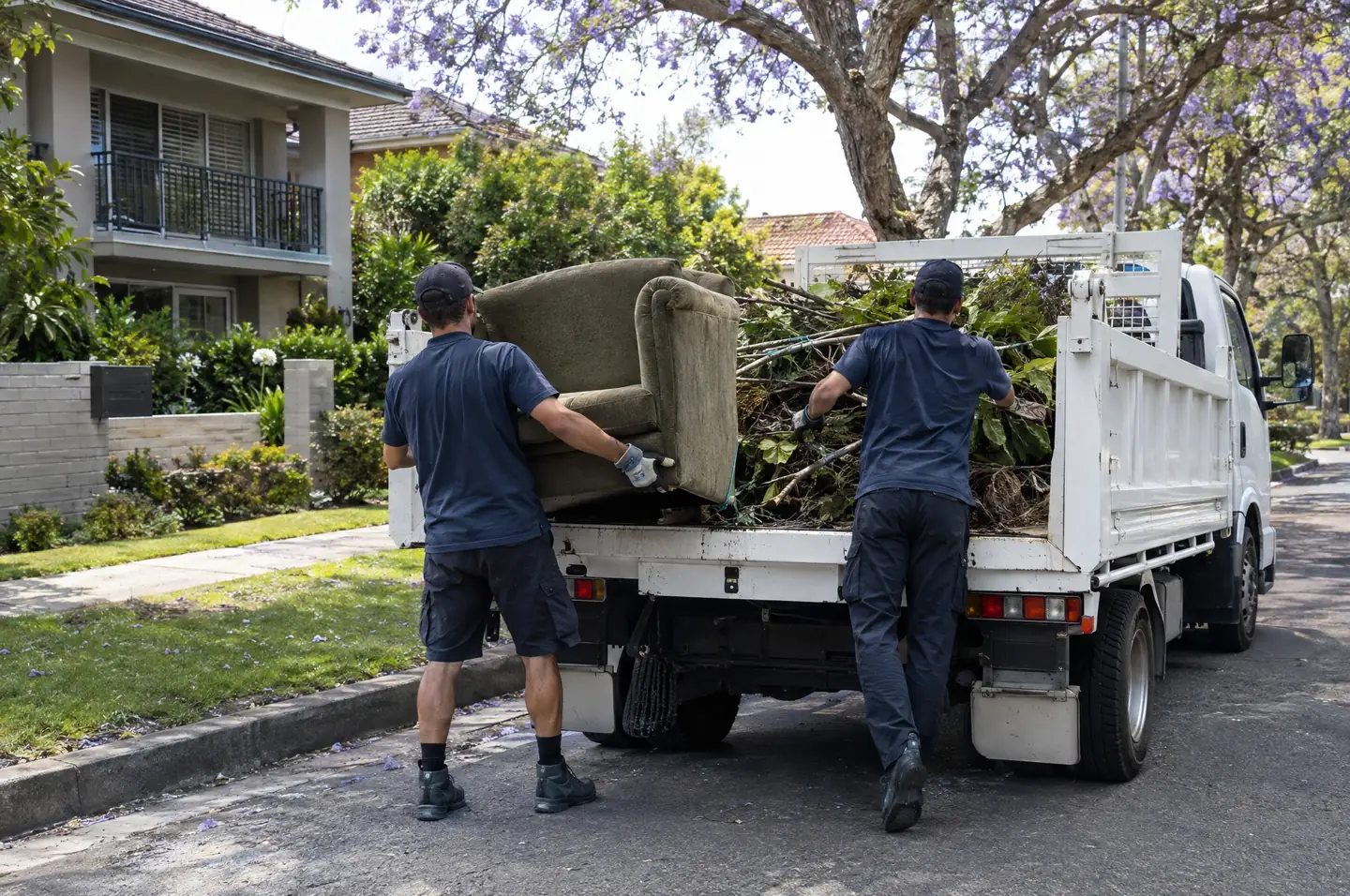
About renovation & builder's waste removal
Renovation waste removal is the heavy end of rubbish removal: tiles, plasterboard, timber, bricks, concrete, old cabinetry, baths and vanities, carpet, packaging and the mixed rubble that every project produces. It suits homeowners doing their own work, small jobs where the tradie did not include disposal, and the end of a build when the skip has gone but a last pile remains. The choice is usually between a skip bin and a load-and-go crew; the crew wins where there is no room for a bin, where strata will not allow one, or where the material needs carrying out through the house.
These suburbs add two complications. The first is age. Many houses in Lane Cove, Dee Why, Randwick and Mona Vale were built before 1990 and may contain asbestos cement in eaves, wet-area linings, fences and old roofing; it must never be cut, sanded or pressure washed, and it cannot go in a skip that is not approved for it or in any household bin. The second is access. Paddington terraces back onto lanes, Bondi and Neutral Bay apartments have renovation by-laws about lifts and bin placement, and sloping blocks in Northbridge and Seaforth turn every bag of rubble into a stair carry.
Removing waste needs no licence, but the renovation that produced it may have, and the disposal rules are strict. Builder's waste must go to a licensed facility, and the EPA treats dumping as a serious offence. Asbestos waste can only go to a landfill licensed to accept it, removal of more than 10 square metres needs a licensed asbestos removalist, and loads over 100 kilograms or 10 square metres are tracked through the EPA's system. Every tradie in the network has verified identity and ABN, current public liability insurance and local references, and will tell you honestly when a load needs a specialist rather than a trailer.
What the job usually includes
How it works
- Tell us about the jobDescribe the renovation, the materials in the pile and roughly how much there is. Photos matter here more than anywhere, because weight drives this job. Say when the house was built, whether anything might be asbestos cement, which floor the waste is on, and where a truck or trailer can stand.
- We match local removal tradiesYour job goes to vetted, independent rubbish removal tradies who handle builder's waste in your area and have passed identity, ABN, insurance, work-history and conduct checks.
- They quote you in writingInterested tradies contact you directly and quote under their own business name, usually after seeing the pile. The quote should state the volume or weight it covers, which materials are excluded, how recyclables are separated and where the load goes. You choose, with no obligation.
- Removal dayA careful crew protects floors, stairs and lift walls, bags dusty material before carrying it, keeps clean concrete, metal and timber separate from mixed waste, and loads within the vehicle's legal weight. Anything that looks like asbestos cement stops the job until it is assessed. The load is covered, the site is swept and the receipts are kept.
- AfterwardsCheck the rooms, the path out and the street, and ask for the facility receipt. If the crew flagged suspect material, follow that up with a licensed assessor before anyone touches it again. Tell us how the match went; feedback after each job keeps the network honest.
Weight, sorting and knowing when to stop
Renovation waste is dense, and good tradies quote and load accordingly rather than guessing by volume and overloading a ute. They separate streams because it is lawful and because it keeps disposal costs down: clean concrete, brick and tile to a crushing facility, scrap metal to a yard, untreated timber and plasterboard to recyclers where available, and only the mixed residue to landfill. Treated pine, painted timber and anything with nails is kept out of green loads. Loads are secured and covered, and tipping receipts are kept for you.
The mark of a professional is what they refuse to touch. Fibro sheeting, old vinyl floor tiles, textured ceilings and cement eaves from a pre-1990 house are treated as asbestos until a licensed assessor says otherwise; nobody breaks them up, and they go to a licensed landfill via the right process rather than into a mixed load. Dust is damped down, not swept into the drain. If a skip would suit the volume better, a good tradie says so, and reminds you that a bin on the street needs a council permit while one on your driveway does not.
Questions worth asking the tradie
Frequently asked questions
A skip suits long jobs where waste accumulates over days and there is space on your own land to put it; putting a bin on the street needs a permit from council. Load-and-go suits a one-off pile, apartments and terraces with no bin space, and material that needs carrying out of the house. For heavy rubble the crew's vehicle weight limits matter, and a tradie may suggest two trips or a skip.
Stop. Houses built before 1990 may contain asbestos cement in eaves, wall and wet-area linings, fences and roofing. Have it tested by a licensed assessor. Removal of more than 10 square metres must be done by a licensed asbestos removalist, smaller amounts still need careful handling and double wrapping, and all of it must go to a landfill licensed to accept asbestos. It cannot go in a household bin, an ordinary skip or a council clean-up.
No. Northern Beaches, Ku-ring-gai, Waverley and other councils exclude building and renovation materials such as tiles, bricks, rubble, kitchen cabinets, vanities and fence palings from kerbside collections. That is why a private tradie or a skip is the usual route.
Quite a lot. Clean concrete, brick and tile are crushed into road base, scrap metal is always recyclable, plasterboard and untreated timber have dedicated recyclers, and cardboard packaging goes to normal recycling. Sorting on site keeps those streams clean and reduces what goes to landfill. Mixed, contaminated loads cost more to dispose of.
Liquids and chemicals are usually excluded. Leftover paint, solvents, adhesives and gas bottles are for a council Household Chemical CleanOut day or a community recycling centre, and empty, dry paint tins can go to recycling. A tradie will tell you what they can and cannot load.
Ask for the receipt from the transfer station or landfill. It shows the facility, the date and the weight, and it is your evidence if a load is ever traced back. Tradies in the network have agreed to lawful disposal as part of our code of conduct, and homeowner feedback after each job is how we hear when something was not right.