About pressure cleaning
Pressure cleaning is for hard surfaces: concrete driveways, paths, pool surrounds, patios, pavers, retaining walls, fences, steps, bin areas and the forgotten side passage. A petrol machine with a rotary surface cleaner lifts grime evenly without the stripes a hand lance leaves, and a pre-treatment deals with mould and oil before the water goes on. It is worth booking when paths have become slippery in winter, before sealing a driveway, ahead of a sale or a party, or when a pool deck is spoiling the view of the pool.
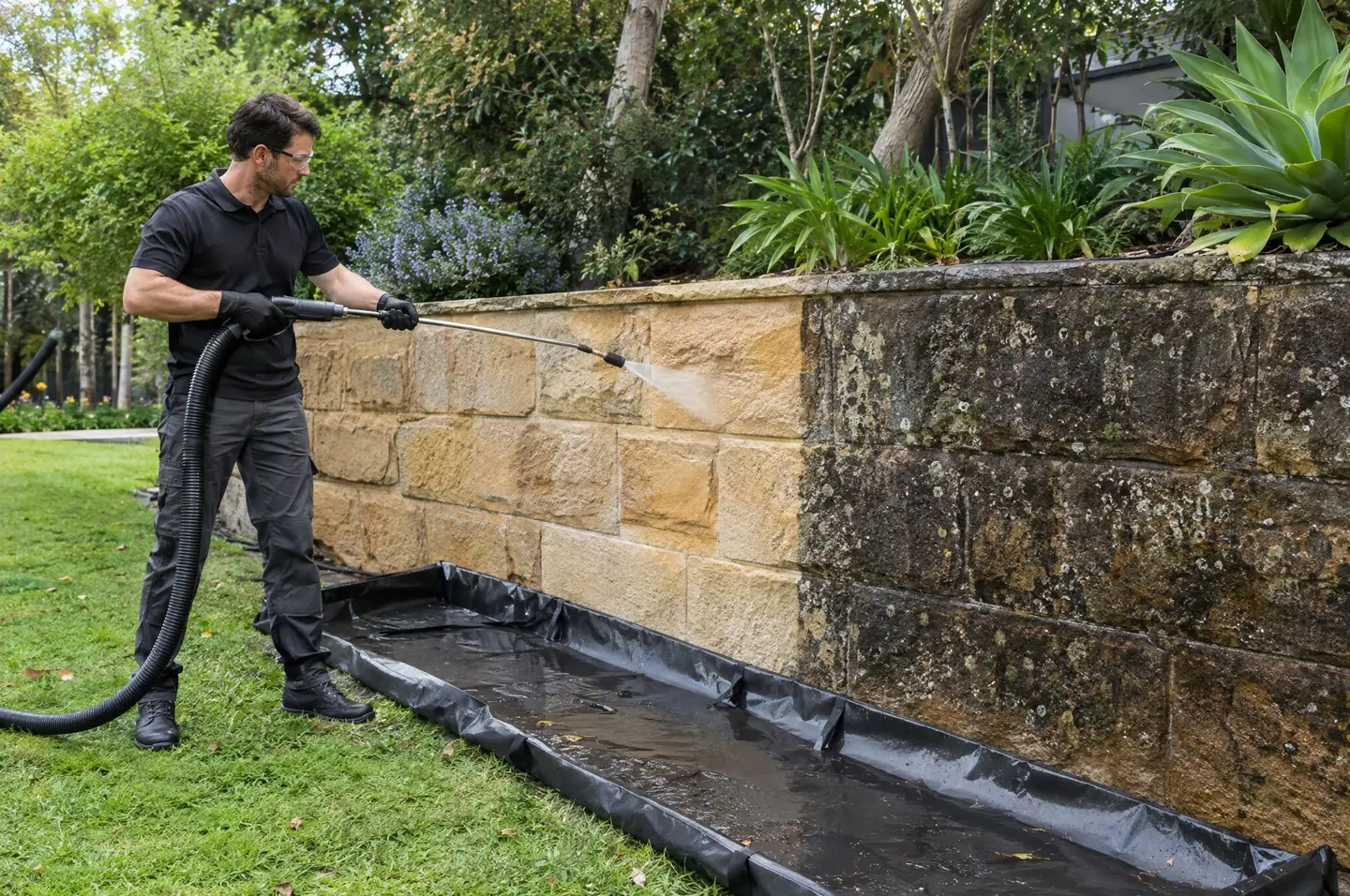
Surfaces in these suburbs vary more than most. Northern Beaches driveways are mostly exposed aggregate or coloured concrete. Pymble, Killara and Wahroonga paths sit under gums that drop tannin-rich litter and keep the ground damp. Shaded Castlecrag and Northbridge blocks grow moss on everything. The Eastern Suburbs and Hunters Hill add sandstone, which must only ever be rinsed at low pressure because high pressure tears the soft surface away. Clay pavers lose their jointing sand if cleaned carelessly, and older coloured concrete can be stripped of its sealer and its colour in one pass.
In NSW, pressure washing is named in the minor maintenance and cleaning class of contractor licence, yet that licence is mandatory only for work valued above 5,000 dollars with GST included. Home driveways and courtyards do not reach that, so vetting is what protects you: we confirm identity against an active ABN, keep their insurance certificate on file, review recent local work and references, and require written quotes. Two rules bind every job whatever its size. Wash water carrying sediment, detergent or oil must not enter the stormwater system, and asbestos cement, found in pre-1990 fences and eaves, is never to be pressure cleaned.

What the job usually includes
How it works
- Tell us what needs cleaningList the surfaces and their rough size, and say what they are made of if you know: plain or coloured concrete, exposed aggregate, pavers, sandstone, tiles. Photos of the dirtiest patches and the slope help, as does a note on where water can drain. Tell us if the area was sealed before.
- We match vetted local tradiesYour job goes to vetted, independent pressure cleaning tradies who work in your part of Sydney and carry the right gear, including surface cleaners and water recovery where it is needed. We have already checked ID and ABN, public liability insurance and recent local work. It costs you nothing and there is no obligation.
- Written quote, direct from the tradieThe tradie quotes you under their own ABN, in writing. It should name each area, the method and pressure range for each surface, any pre-treatment or degreaser, how wash water will be managed, and whether re-sanding joints or sealing afterwards is included or separate.
- The cleanA careful tradie sweeps first, pre-treats stains, then works systematically with a surface cleaner on flat areas and a fan tip on the rest. Pressure is dropped for pavers, sandstone and anything coated. Drains are blocked or bunded, and dirty water is pushed onto garden, captured or vacuumed. Doors, windows and cars nearby are shielded from spray.
- After the cleanLook at the surface once it has dried, because wet concrete hides streaks. Check joints, edges and the finish near walls. If sealing is the plan, the surface usually needs a couple of dry days first. Tell us how it went, as feedback decides who stays in the network.
Matching pressure to the surface
Anyone can hire a machine. The skill is in reading the surface. Dense broom-finished concrete takes high pressure well; coloured and stencilled concrete, exposed aggregate and clay pavers do not, and sandstone will scar under a lance held too close. A good tradie starts in a corner, finds the lowest pressure that works, and uses chemistry for the rest, with a mould treatment for green growth, a degreaser for oil, and a rust remover for fertiliser spots. They run a surface cleaner on the flats so the finish is even, and they keep the lance moving so there are no tiger stripes or etched arcs that only show up once the surface dries.
Water management separates the professionals. Pressure cleaning produces a lot of dirty water, and in NSW it is an offence to let it enter the stormwater system, which in these suburbs usually means the harbour or the surf within hours. Good tradies block the nearest pit, bund the edge of the work area, direct water across lawn so it soaks away, or use a vacuum recovery system on sites that drain straight to the street. They also keep spray away from pools, neighbouring walls and parked cars, refuse to touch suspected asbestos, and tell you when a surface is better soft washed than blasted.
Questions worth asking the tradie
Frequently asked questions
Yes, if the pressure is wrong for the surface. Too much on coloured or stencilled concrete removes colour and sealer, on exposed aggregate it loosens stones, and on sandstone it eats the surface. Experienced tradies test a small area, drop the pressure as far as the dirt allows, and lean on pre-treatments instead of force.
Fresh oil usually lifts with a degreaser and hot water. Old stains that have soaked into unsealed concrete are harder, and a shadow often remains. A poultice or a repeat treatment can improve it. Sealing afterwards stops the next spill soaking in, which is why cleaning and sealing are often booked together.
The cleaning itself is fine. The offence is letting polluted water, including sediment, detergent, oil or paint flakes, enter the stormwater system, which NSW's Protection of the Environment Operations Act 1997 treats as water pollution. Tradies manage this by containing water, diverting it to lawn or using recovery equipment.
Pressure washing is listed in a NSW contractor licence class called minor maintenance and cleaning, but that licence is compulsory only for jobs priced above 5,000 dollars including GST, which few home cleans reach. Insurance, ABN, references and work photos are the checks that count, and they are the ones we make.
Only gently. Sandstone is porous and soft, and a close lance will blast away the surface and open it up to more staining and salt attack. The usual approach is a mould treatment, a dwell time, and a low-pressure fan rinse from a distance. Never let anyone use acid on sandstone either.
The surface needs to be properly dry. Most sealer manufacturers want the concrete dry right through, which in shade or winter can take several days, and sealing over damp concrete causes white blooming under the film. Your tradie should check with a moisture meter or a taped plastic sheet before opening a tin.