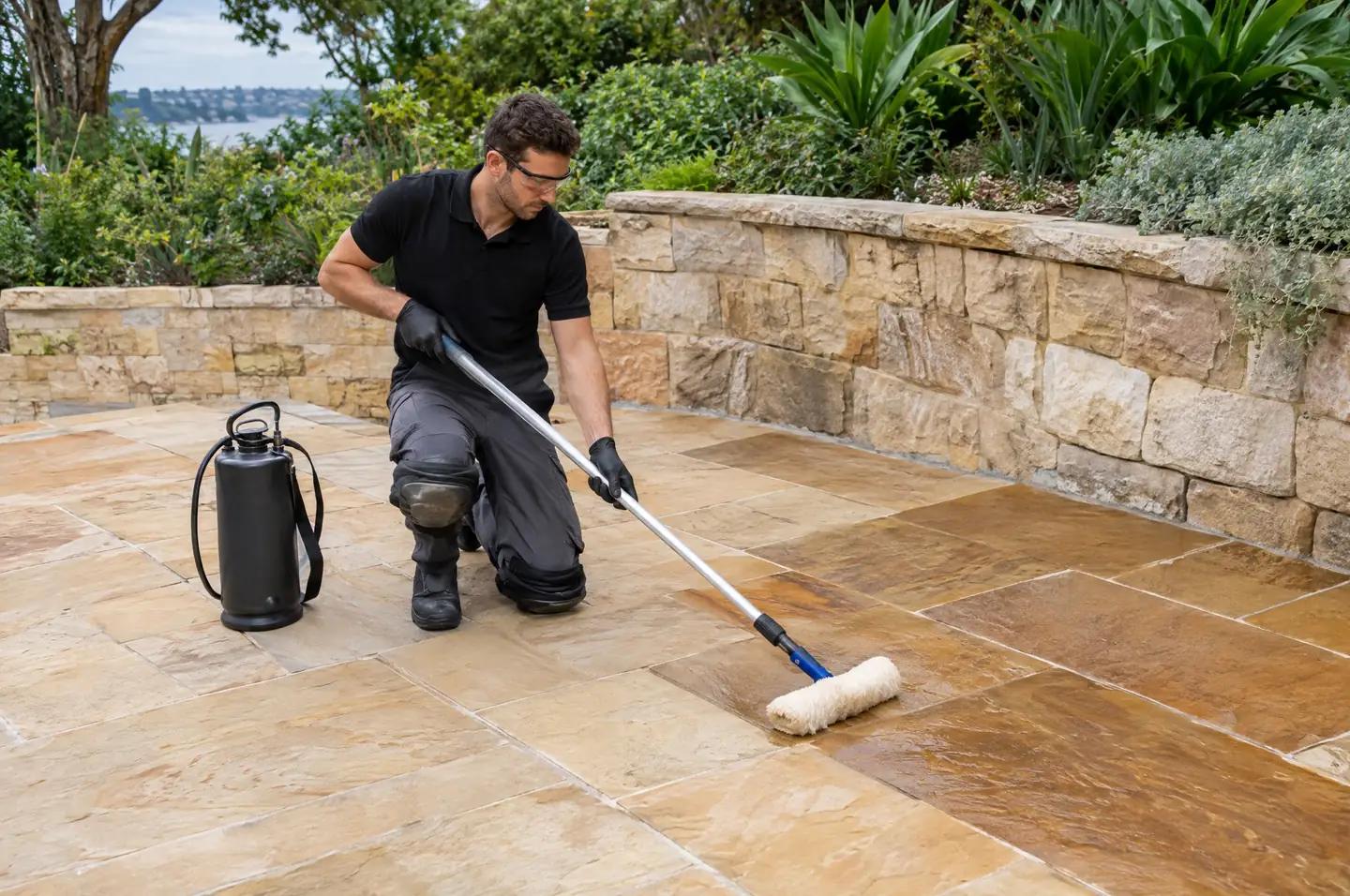
About paver & sandstone sealing
Paver and sandstone sealing protects porous paving from water, oil, food, rust and tannin stains and makes it easier to clean. The products split into two families. Penetrating or impregnating sealers sink into the pores, keep the natural look and let moisture escape; film-forming sealers sit on top, add sheen or a wet look and need more upkeep. The work is cleaning, treating stains and efflorescence, replacing lost jointing sand, letting everything dry, then applying in thin coats with a test patch first. It is worth doing on new paving once it has weathered, around pools and barbecues, and before stone that has started flaking gets worse.
Sandstone is the stone of Sydney and it is everywhere in these suburbs: Hawkesbury sandstone steps, terraces and pool surrounds in Vaucluse, Hunters Hill, Mosman and Palm Beach, often beside heritage walls cut from the same rock. It is soft and very porous, and in coastal air it takes up salt that crystallises in the pores and flakes the surface, which heritage guidance in NSW identifies as a major cause of decay. Clay and concrete pavers from newer builds in Dee Why, Lane Cove and Randwick throw white efflorescence in their first months. Travertine and bluestone around pools from Bronte to Newport stain with sunscreen and salt chlorinator splash.
In NSW the licence picture is simple: sealing is a protective treatment, which the minor maintenance and cleaning licence class picks up only when a single job goes beyond 5,000 dollars including GST, so most courtyards and pool surrounds involve no licence at all. That is why our checks are ID against the ABN, a current insurance certificate, paving jobs done nearby, references and written quotes. Heritage adds a layer. Woollahra, Mosman, Ku-ring-gai, Hunter's Hill and North Sydney have heritage conservation areas where sandstone facades, walls and steps may need council advice before anything that changes their appearance, and conservation practice there favours breathable treatments over coatings.

What the job usually includes
How it works
- Tell us about the pavingSay what it is, if you know: sandstone, clay pavers, concrete pavers, travertine, bluestone or something else. Describe where it is, how big the area is roughly, what is staining it, and whether it has been sealed before. Photos in daylight, including a close-up of the joints, help. Mention a pool, barbecue, bore water or sprinklers nearby.
- We match vetted local tradiesYour job goes to vetted, independent tradies who seal stone and pavers in your suburb and carry the penetrating and enhancing products the job calls for. Each has had their identity matched to an active ABN, holds a public liability certificate we have checked, and has shown us recent paving work nearby. Matching is free, and you choose whether to hire.
- A written quote, direct from the tradieThe tradie quotes under their own ABN after seeing the paving. The quote should name the sealer and its type, say how the surface will be cleaned and what stains will be treated, cover joint sand, state the finish you approved on a test patch, give drying and cure times, and explain how cleaning water will be kept out of the stormwater drain.
- Prep and sealingA careful tradie cleans at low pressure on sandstone and natural stone, uses alkaline or specialist cleaners rather than acid on anything acid-sensitive, treats efflorescence so it does not get sealed in, re-sands the joints and lets the paving dry for as long as it takes. Sealer goes on thin, worked into the stone, with the excess wiped off before it dries to a residue. Pool water and gardens are protected.
- After the jobKeep furniture, foot traffic and water off the paving for the time the tradie specifies, and keep pool splash away from it while the sealer cures. Check for even colour and no sticky residue. Note when the next application is due. Then tell us how it went; feedback keeps the network honest.
Let the stone breathe
The most important decision is the type of sealer, and with sandstone the wrong one does real harm. Film-forming and water-repellent coatings can trap moisture and salt inside the stone; NSW heritage guidance on salt attack records many failures from exactly this, with the stone's own surface lost beneath a coating. A good tradie reaches for a breathable penetrating sealer on sandstone, avoids glossy films near the coast, and tests a patch so you see the colour change before the whole terrace gets it. They also know that hydrochloric acid etches limestone and travertine and leaves sandstone blotchy, so cleaning is done with the gentlest effective product and never with a close pressure lance.
Timing and detail do the rest. New clay and concrete pavers should weather through their first efflorescence before sealing, or the white bloom is locked under the film. Joints are cleaned and re-sanded before sealing, not after, so the sealer stabilises the sand. The paving must be dry right through, which under trees or beside a pool can take days. Thin coats are worked in and the excess wiped off, because surface residue dries to a sticky, patchy haze that is a nuisance to remove. Around pools the tradie keeps product out of the water, and on heritage walls and steps they advise checking with council rather than changing the look of a listed facade.
Questions worth asking the tradie
Frequently asked questions
Often yes, with the right product. A breathable penetrating sealer reduces water and stain uptake on steps, terraces and pool surrounds without trapping moisture. What sandstone should not get is a glossy film or a water-repellent coating that seals the surface, which heritage guidance in NSW links to salt damage and flaking. Ask what the product is and whether it breathes.
A penetrating sealer with a natural finish barely changes it. A colour-enhancing or wet-look sealer darkens and deepens the stone, which some people want and others regret. Insist on a test patch in an out-of-the-way corner and look at it wet and dry in daylight before deciding.
Efflorescence. As new clay or concrete pavers dry out, moisture brings salts to the surface and leaves them behind as a white bloom. It usually fades over the first months and can be cleaned with a product made for it. Sealing before it has finished locks it under the film, so a good tradie waits or treats it first.
Yes, and it is one of the best places to do it, since salt chlorinator splash, sunscreen and wet feet all mark unsealed stone. The tradie keeps product out of the pool, applies a penetrating sealer with slip resistance in mind, and advises on cure time before swimming resumes. Rinsing the surround with fresh water afterwards helps the sealer last.
Sealing paving in a private garden is not usually the kind of change that needs approval, but external changes to heritage items and to buildings in conservation areas can, and a sealer that darkens a visible sandstone facade or boundary wall may count. In Woollahra, Mosman, Hunter's Hill, Ku-ring-gai and North Sydney, check with council before treating anything visible from the street.
Penetrating sealers on stone can go several years, depending on sun, traffic and pool exposure. Film-forming sealers wear faster where people walk and cars turn. The sign is water soaking in instead of beading. Resealing while the old sealer is still partly working is easier than starting again from stained stone.