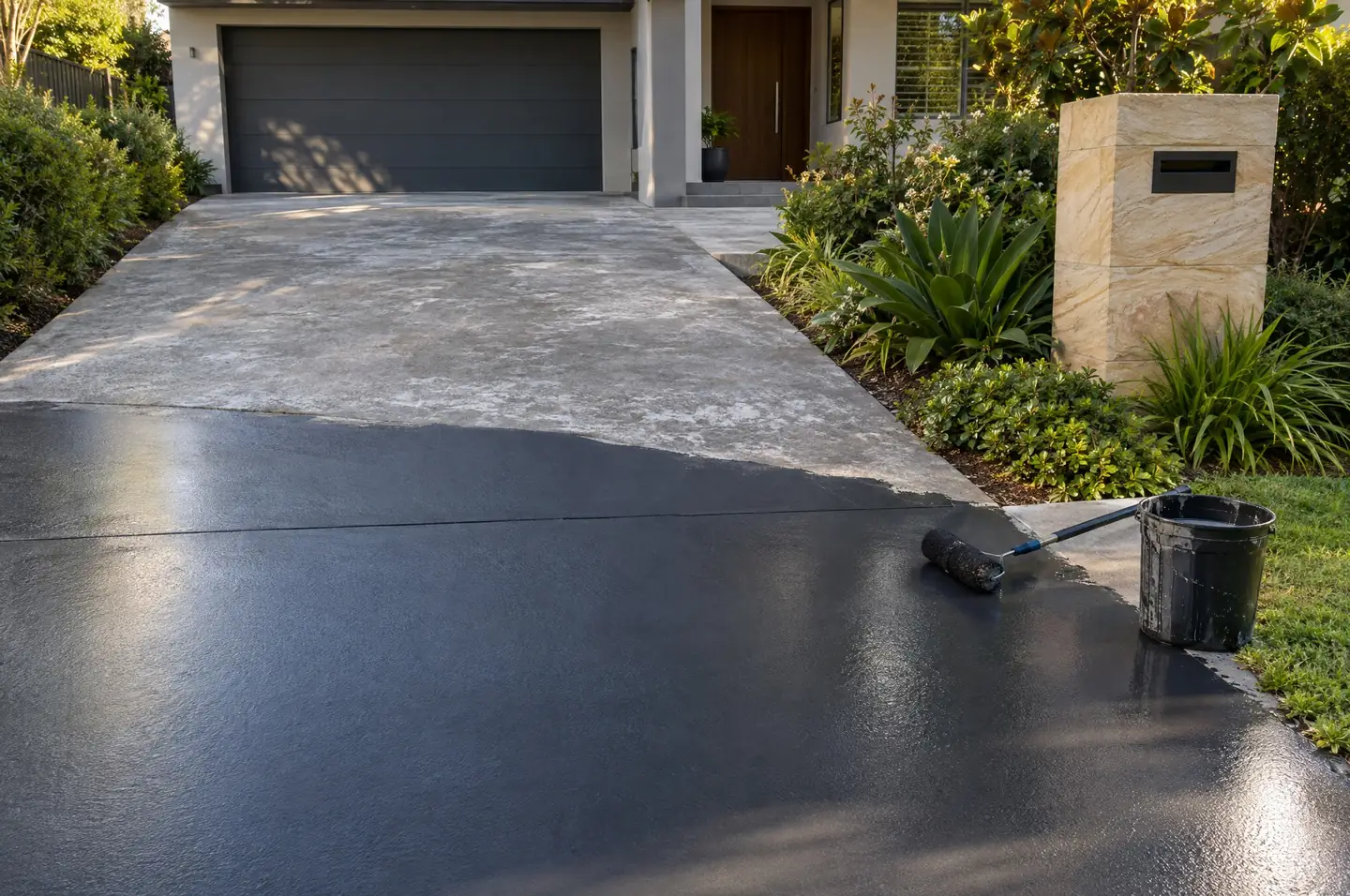
About coloured concrete sealing
Coloured concrete sealing puts a protective film back on oxide-coloured, stencilled, stamped and coloured-topping concrete after the original sealer has worn away. Without it the surface chalks, the colour washes out, and oil, rust and leaf stains soak straight in. The job involves cleaning and degreasing, dealing with any failing old sealer, letting the slab dry right through, then rolling on thin coats of a solvent or water-based acrylic, sometimes tinted to lift faded colour, with a slip additive where people walk. It is worth doing when water stops beading, when the colour looks grey and dusty, and before a sale.
Driveways in these suburbs take a beating. Sun on north-facing drives in Dee Why, Collaroy and Randwick fades oxide colour and breaks down acrylic. Gums over Pymble, Gordon and Turramurra drop tannin-rich litter that stains unsealed concrete within weeks. Steep driveways in Seaforth, Clontarf and Castlecrag need grip, so a slip-resistant finish is not optional there, and the sealer makers themselves warn against coating slopes beyond a certain pitch. Salt air along the coast speeds up the breakdown of any film. And in heritage conservation areas across Woollahra, Mosman and Ku-ring-gai, a dramatic change in finish on a visible driveway is worth a call to council first.
Sealing is a protective coating. NSW puts that kind of work in its minor maintenance and cleaning contractor licence class, and the licence becomes compulsory when a single job climbs above 5,000 dollars including GST. Under that figure, where most home driveways land, there is no licence to check, so the vetting carries the weight: photo ID matched to the ABN, an insurance certificate of currency, pictures of driveways sealed nearby, references and a written quote. The environmental rule still applies in full. Wash water, acid etch rinse and solvent must stay out of the stormwater system, as NSW's Protection of the Environment Operations Act requires, and that shapes the prep.
What the job usually includes
How it works
- Tell us about the slabSay whether the concrete is oxide-coloured, stencilled, stamped or a coloured topping, roughly how old it is, whether it was sealed before and how long ago, and how steep it is. Photos in dry daylight show fading and peeling best. Mention oil stains, shade, overhanging trees, and whether cars need to use it during the work.
- We match vetted sealing tradiesThe job goes to vetted, independent tradies who seal decorative concrete in your area and understand which products go over which. We have matched their ID to an active ABN, seen their public liability certificate and looked at recent driveways they have sealed nearby. Matching is free and there is no obligation.
- A written quote naming the productAfter seeing the slab the tradie quotes under their own ABN. The quote should name the sealer and finish, say whether the old coat will be stripped or reactivated, include the prep and any stain treatment, specify the slip additive, give the dry times before foot and vehicle traffic, and say how wash and etch water will be contained.
- Prep and sealingA careful tradie cleans and degreases, tests the old sealer for adhesion, strips it if it fails, and checks moisture before opening a tin. They seal in the right temperature window, out of direct sun and rain, in thin coats with a roller, adding grit to the final coat where grip matters. Wash water is diverted to the garden or captured, and the neighbours' drive is masked from overspray.
- After the jobKeep off the surface for the time the tradie specifies, which for most acrylics means about a day on foot and several days before a car. Look for even sheen, no roller lines and no white patches once cured. Keep leaves and oil off it, and ask when a maintenance coat is due. Then let us know how the tradie went.
Prep, product and patience
Almost every failed sealing job failed in the prep. Sealing over dirt, oil or a peeling old coat means the new film peels with it. Sealing over damp concrete traps moisture and turns the finish milky, which is why manufacturers specify a moisture test, and why a good tradie waits out shade and winter rather than chasing a date. New or bare concrete may need acid etching for adhesion, but etching an existing acrylic coat achieves nothing; the tradie should know the difference, and know when a solvent-based product will re-dissolve and bond to the old one and when a full strip is the only honest option.
Product choice and application are next. Solvent-based acrylics give the deep wet look and go on over old acrylic; water-based versions have less odour and lower sheen; penetrating sealers protect without any film at all. Tinted sealers can rescue faded colour but hide the natural variation that made the concrete attractive, so a test patch matters. Thin coats, the right temperature range, recoat times respected and a slip additive on slopes and pool surrounds separate a finish that lasts from one that bubbles, lines or turns into an ice rink in rain. The environmental side is part of the craft too: etch rinse neutralised and captured, wash water kept out of the drain.
Questions worth asking the tradie
Frequently asked questions
The original sealer has worn through and the surface is chalking under sun and rain. Oxide colour sits in the top layer of the concrete, so once that layer wears the colour fades with it. Cleaning and resealing, sometimes with a lightly tinted sealer, brings the depth back and slows the wear.
No. Sealer manufacturers want new concrete to cure first, typically a few weeks depending on conditions, and to be dry right through before coating. Sealing too early traps moisture and turns the film white. If a builder has just poured your driveway, ask the sealing tradie when it will be ready rather than booking by the calendar.
Peeling usually means it was applied over dirt, oil, curing compound or a failing earlier coat. White blooming means the concrete was damp when it was sealed, or water got under the film later. Either way the fix is to strip back to sound concrete, dry it properly and start again, which a quote should say plainly.
A plain acrylic film can be slippery when wet, especially on a slope or around a pool. A fine slip-resistant additive mixed into the final coat fixes this with little change to the look, and manufacturers recommend it in those spots. They also advise against coating very steep sections at all. Make sure the quote includes it.
It depends on sun, traffic and the product. Many acrylics on a driveway want a maintenance coat every couple of years, and a shaded path may go longer. You will know by the water: when it stops beading and the colour looks flat, it is time. A thin maintenance coat before the film wears through is far less work than a strip and restart.
Only for work priced beyond 5,000 dollars including GST, which is where NSW's minor maintenance and cleaning licence class begins. A typical home driveway sits below that, so what protects you is a tradie with a live ABN, insurance that is in date, references and pictures of similar driveways, which are the things we check.