About solar panel cleaning
Solar panel cleaning removes the film that rain does not shift: salt haze near the coast, bird droppings, pollen, soot, dust from leaf litter and the strip of lichen and grime that forms along the lower frame where water sits. The job is done with soft brushes on a telescopic pole fed with purified water, from the ground where the roof allows and from the roof with fall protection where it does not. It is worth booking when output has dropped against the same month last year, when panels look dull or streaked from the street, or when birds have taken to roosting on them.
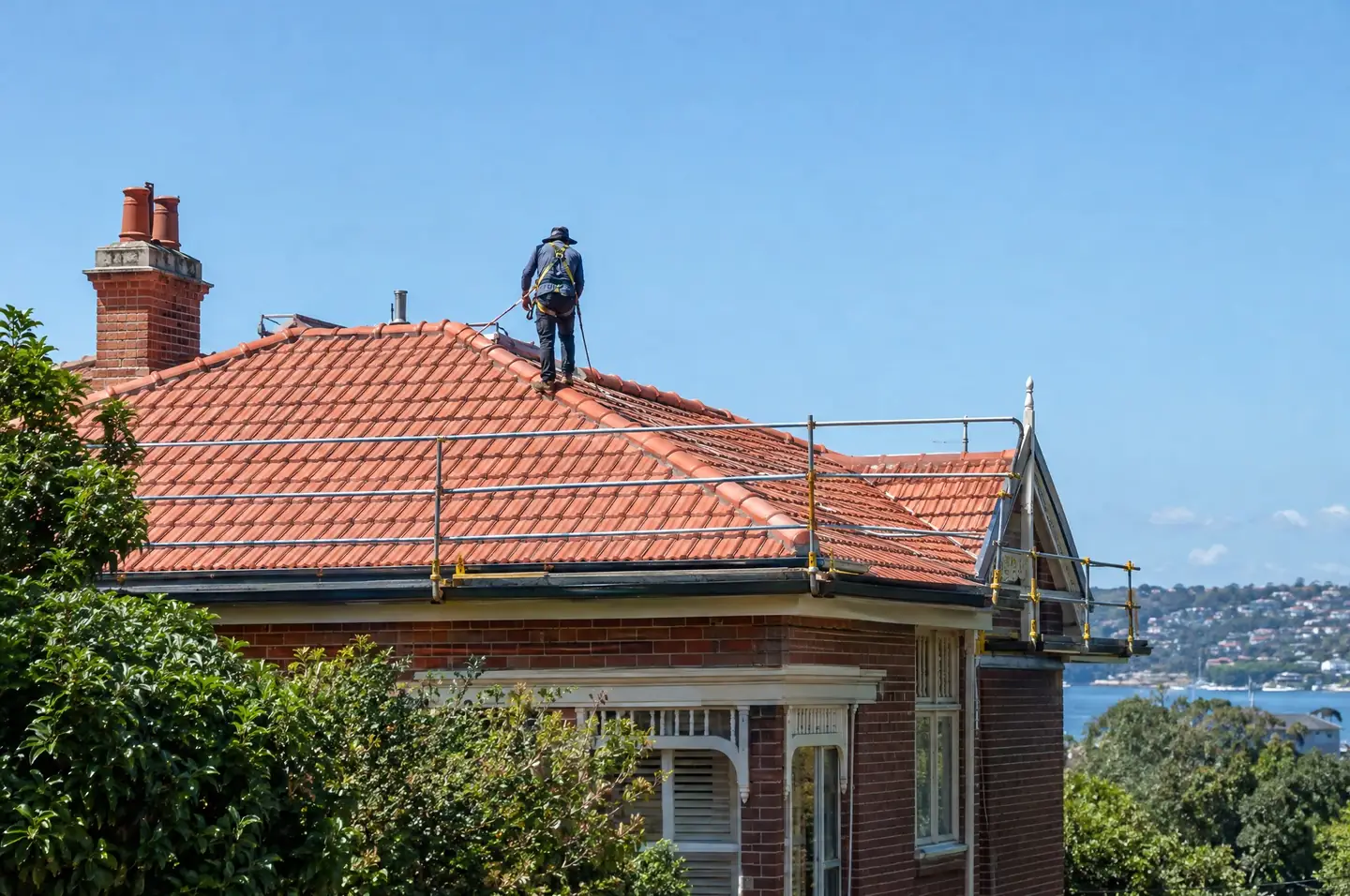
Panels in these suburbs get dirty in predictable ways. Along the beaches and the harbour, from Manly and Freshwater to Bronte and Watsons Bay, sea air leaves a salt film that dulls glass within weeks of a clean. Beneath the tall gums of the Upper North Shore and Terrey Hills, sap, pollen and leaf dust settle, and shading from branches compounds the loss. Flat-pitched panels anywhere hold water and grow a grime line along the bottom edge. Many systems here sit on steep terracotta roofs or on two and three-storey homes stepping down to the water, which makes the access plan as important as the cleaning.
Cleaning panels is not licensed work, but anything electrical on the system is, at any value, and only a licensed electrician should open isolators, touch wiring or diagnose a fault. Most panel makers set out how their modules may be cleaned: soft, non-abrasive brushes, clean or deionised water, no high-pressure jets, no harsh chemicals, no walking on the glass, and cleaning in cool conditions so cold water does not shock hot panels. Working at height brings NSW work health and safety rules into play, so edge protection, harness anchors or a pole from the ground are expected. Our vetting covers identity and ABN, public liability insurance, recent work and references.

What the job usually includes
How it works
- Tell us about the systemSay how many storeys the house is, the roof type and pitch, and roughly where the panels sit. A photo from the street showing the array helps, as does a screenshot of recent output if you have an app. Mention trees overhead, bird problems, and whether there is a safe place for a ladder or a lift.
- We match vetted local tradiesWe send the job to vetted, independent cleaners who service panels in your suburb and own water-fed poles, purification units and the fall protection for your roof. Each has shown us ID matched to an active ABN, a current public liability certificate and photos of recent arrays they have cleaned. Matching is free and you decide who to hire.
- They quote directly, in writingThe tradie quotes under their own ABN after seeing the roof. The quote should state the method, the water used, how they will reach the panels and protect themselves at height, what they will do about droppings and lichen, and what they will not do, such as electrical work, which belongs to a licensed electrician.
- The cleanA careful tradie cleans early or late in the day when the glass is cool and output is low, never walks on the panels, and never aims a pressure jet at the junction boxes or frame seals. Panels are brushed and rinsed with pure water so they dry without spots. Anything that looks cracked, loose or chewed is photographed and left alone. Run-off is kept out of the tank and the street drain.
- After the jobCompare the inverter or app readings on a similar sunny day over the following week. Look at the panels from the street for streaks. If the tradie reported damage or nesting, book an electrician or a bird proofing job. Tell us how it went, because feedback is what keeps the network honest.
Clean the way the manufacturer says, and stay off the glass
Panel makers are specific about cleaning because the wrong method voids warranties and shortens the life of the module. The consistent advice is soft brushes or cloths, clean low-mineral or deionised water, no abrasive pads, no scrapers on toughened glass, no pressure washers, no household detergents or acids, and no big temperature difference between the water and the glass. One major manufacturer's guideline caps nozzle pressure well below what a domestic pressure washer produces and recommends cleaning in low light. A good tradie follows this without being asked, because they also know that a scratched anti-reflective coating or a cracked cell is not something a clean can fix.
The rest is about access and limits. Panels sit on the sunniest and often the steepest part of the roof, so a professional plans the job from the ground with a long pole wherever possible, and uses anchors and a harness or edge rails when they must go up. They do not stand on panels, lean on frames, or hose water into the junction boxes. They know that electrical work on a solar system is licensed in NSW at any value, so they report a fault rather than poking at it. And they manage the run-off, keeping chemicals out of your rainwater tank and sediment out of the stormwater drain.
Questions worth asking the tradie
Frequently asked questions
Rain removes loose dust but not salt film, bird droppings, sap or the grime strip along the lower edge, and shading from a single dirty patch can pull down the whole string. How much you gain depends on how dirty they are. Compare output before and after on similar days rather than relying on a promised percentage.
A gentle hose on a cool morning does no harm and shifts dust. It will not remove bonded grime, and tap water dries with mineral spots that attract more dirt. Never use a pressure washer, and never climb onto the roof without fall protection. A professional clean with a soft brush and pure water goes further.
Cleaning done the way the manufacturer describes will not. Abrasive pads, pressure jets, harsh chemicals and standing on the modules can. Ask the tradie what method they use and check it against the care instructions in your panel documentation or on the maker's website.
Near the coast or under trees, roughly once or twice a year keeps salt and lichen in check. On an open inland block the interval can stretch much longer. The best guide is the inverter: if output is falling against the same month last year and nothing is shading the array, dirt is the usual explanation.
No. Diagnosing or repairing anything electrical on a solar system is licensed in NSW whatever the job is worth, so it belongs to a licensed electrician or your installer. A good cleaner will photograph cracked glass, burnt connectors or chewed cables and tell you, but will not open isolators or touch the wiring.
Nesting under an array fouls the panels, blocks drainage and can damage cabling. Cleaning deals with the mess, not the cause. Bird proofing mesh clipped to the frame stops them getting back in. Ask the tradie to report what they find so you can book that as a separate job.