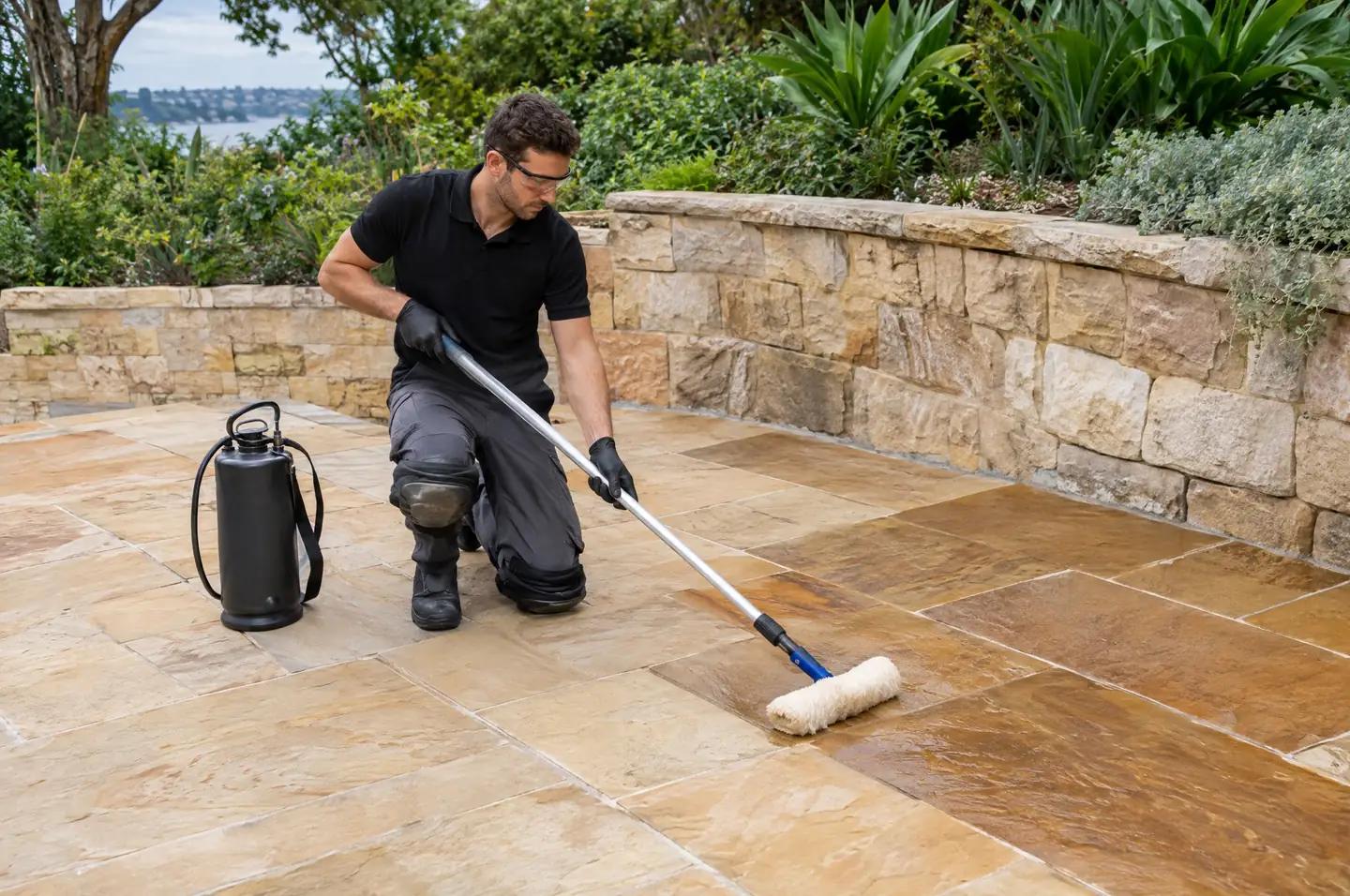
About exposed aggregate sealing
Exposed aggregate sealing protects the cement matrix that holds the pebbles and brings up the colour of the stone. Over time sun, water and tyres wear the matrix, stones loosen, moss takes hold in the texture and oil or leaf tannin stains the pale cement. A clear solvent or water-based acrylic restores the wet look, a matt penetrating sealer protects without shine, and either can carry a slip additive. The work is cleaning, stain treatment, drying, then even coats by roller or broom. It is worth doing on a new driveway soon after the aggregate is exposed, and again whenever water stops beading.
Exposed aggregate is the default driveway across the Northern Beaches, from Freshwater to Mona Vale and Avalon Beach, and common on newer North Shore and Eastern Suburbs builds. Salt air dulls the finish quickly near the coast. Shaded drives in Lindfield, Wahroonga and Castlecrag grow moss in the texture, and gums overhead drop litter that leaves brown tannin shadows on the cement. Some local aggregate mixes contain iron-bearing stone that throws rust spots. Steep driveways down to the water in Clontarf, Seaforth and Bellevue Hill need grip, because a glossy film on a slope becomes dangerous in rain, and a sealer with grit in it is the fix.
A protective coating on a driveway sits within NSW's minor maintenance and cleaning licence class, yet a contractor licence applies only to jobs above 5,000 dollars including GST, a figure a home driveway seldom reaches. That leaves the usual safeguards: an active ABN matched to photo ID, a public liability certificate we have seen, recent sealing work nearby, references and a written quote. The stormwater rule applies at every size. Pressure-wash water and any acid etch rinse carry cement fines and chemicals, and letting them reach the street drain is an offence, so a careful tradie bunds the driveway and diverts the water to lawn or a capture.

What the job usually includes
How it works
- Tell us about the drivewaySay how old the concrete is, whether it has been sealed before and when, how steep it is, and what bothers you: dull finish, loose stones, moss, oil or rust. Dry daylight photos show the surface best. Mention trees overhead, whether the drive is shaded, and whether cars can be kept off it for a few days.
- We match vetted local tradiesWe send the job to vetted, independent sealing tradies who work on exposed aggregate in your area. Each one has had their ID matched to an active ABN, holds a public liability certificate we have on file, and has shown us recent driveways they sealed nearby. The match is free and the decision stays with you.
- They quote you directly, in writingThe tradie quotes under their own business name after seeing the slab. The quote should name the product and finish, describe the prep including moss, oil and rust treatment, say whether old sealer is reactivated or stripped, include the slip additive, give traffic times, and explain how wash water will be kept out of the drain.
- Prep and sealingA careful tradie cleans with a surface cleaner and treatments rather than brute pressure, which would pop more stones. They let the slab dry, check it, then seal in the right temperature window, avoiding wind, rain and hot sun, in thin coats that do not pool in the texture. Grit goes into the final coat on slopes. Edges, the letterbox and the neighbour's drive are masked.
- After the jobStay off it for about a day on foot and keep cars away for the number of days the tradie gives you. Check for even sheen and no milky patches once it has cured. Sweep leaves regularly, clear oil quickly, and expect a maintenance coat in a couple of years on a busy drive. Tell us how the tradie performed.
Keep the stones in, keep the shine honest
Exposed aggregate is unforgiving of rough prep. Blasting it at high pressure to save time knocks out the very stones the sealer is meant to protect, so a good tradie uses a surface cleaner at moderate pressure and lets moss killer, degreaser and rust remover do the work. They respect the timing manufacturers set out: on a new pour, sealing within a day of exposing the aggregate or else waiting out the cure; on an old drive, drying it fully, because a wet-look sealer over damp concrete goes cloudy. One Australian maker's data sheet gives a few weeks of cure for new concrete, a short recoat window, a day before foot traffic and several days before cars, and that is the rhythm a quote should reflect.
Finish and safety are decided in the last coat. Too much product pools in the texture, bubbles and leaves roller lines; too little gives a patchy sheen. Solvent-based acrylic re-dissolves the old coat and bonds, water-based goes over clean sound sealer, and a failing film has to come off before either. On sloping driveways, paths and pool surrounds the final coat carries a slip additive, because manufacturers acknowledge that sealing reduces grip, and the same makers suggest resealing roughly every couple of years depending on use. Through all of it the wash and etch water stays out of the stormwater system, and the tradie leaves the drive edges and the street clean.
Questions worth asking the tradie
Frequently asked questions
Yes, and the timing matters. Manufacturers either want it sealed within a day of the aggregate being exposed and washed, or left to cure for a few weeks and then prepared as cured concrete. Your concreter may include the first seal; if not, book it before the first oil stain rather than a year later.
The cement matrix between the pebbles has worn or eroded, usually from sun, water and aggressive pressure cleaning, and the stones have nothing left to hold them. Sealing stops further erosion and locks in what is there. Where stones are already missing, patching is possible but rarely invisible, and a quote should say so.
If the old coat is sound and compatible, yes. Solvent-based acrylics soften and bond with the previous acrylic layer. If the old sealer is peeling, white or a different chemistry, it needs to come off first. A good tradie does an adhesion test and tells you which case you have.
A glossy film on a smooth surface can be, especially on a slope in rain. Exposed aggregate has texture that helps, but manufacturers still advise a slip-resistant additive in the final coat for inclines and pool surrounds. Ask for it in the quote; it makes little difference to the look.
It depends on traffic, sun and shade. One Australian maker suggests resealing roughly every two years, with life varying by use and environment. The practical sign is rain darkening the concrete instead of beading on it, and colour going flat. A maintenance coat at that point is a smaller job than a strip and restart later.
Not for most home driveways. NSW files protective coatings under its minor maintenance and cleaning licence category, and that licence is needed only when one job is worth upward of 5,000 dollars including GST. For anything smaller, insurance, ABN, references and photos of past work are what protect you, and those are the checks we run before a tradie joins.