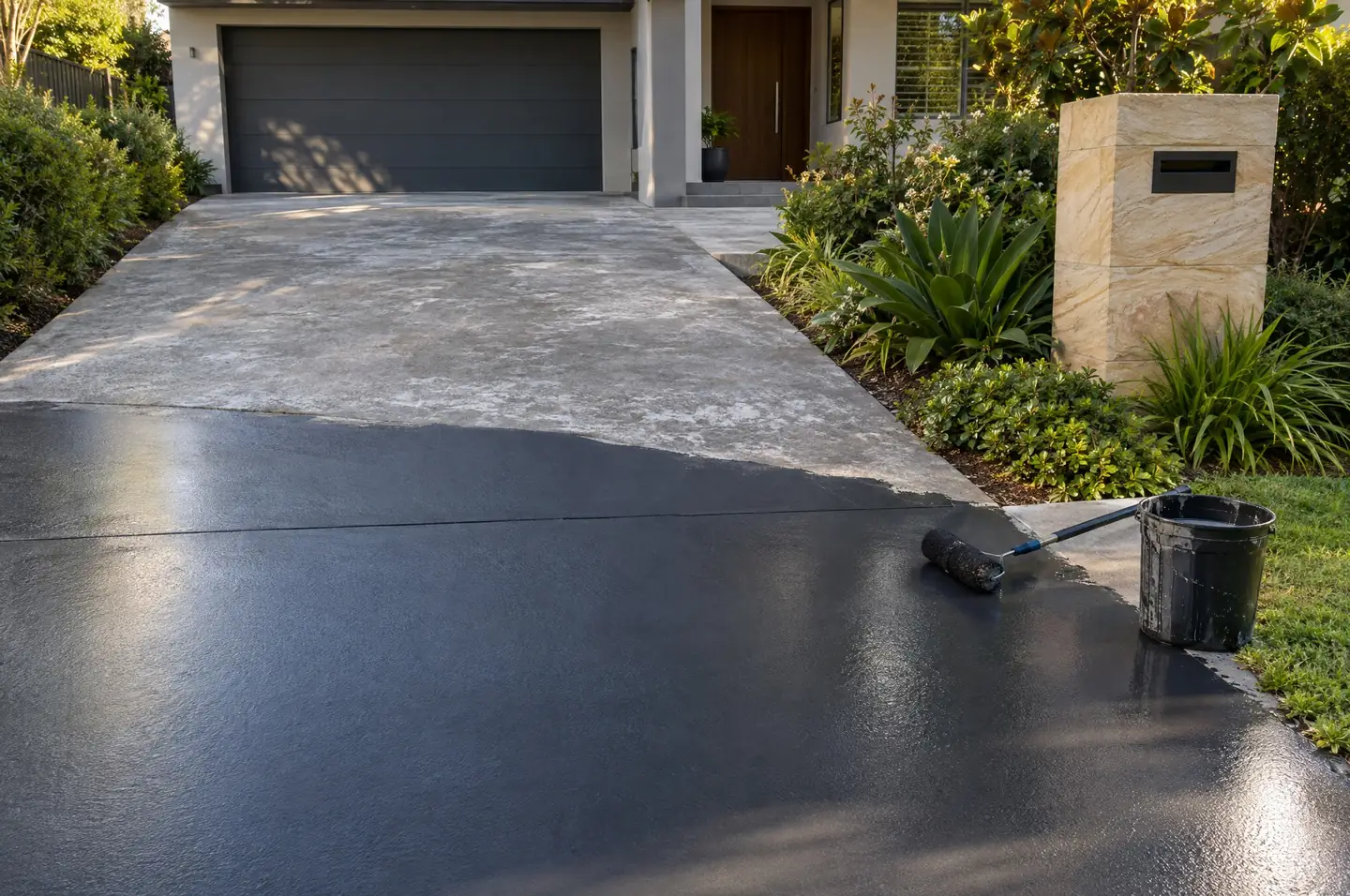
Driveway sealing in Clovelly
Driveways here are typically a single-car strip running beside a semi or bungalow to a garage at the back, sometimes with a common strip shared between neighbours, plus courtyard paving and sandstone paths. Decades-old concrete cracks and pits, newer townhouses have exposed aggregate that loses its sheen, and clay pavers in rear courtyards grow moss in the joints. Shade from the house next door keeps the surface damp, so algae and black mould take hold, and salt carried up the bay leaves pale staining. Tyre marks and oil collect where cars sit in the same spot. Sealing after a thorough clean slows all of this and makes routine hosing effective.
A vetted driveway sealer cleans the surface with a rotary cleaner or low pressure on stone, degreases oil, treats moss and lets the concrete or pavers dry completely before sealing. The dirty rinse water is captured or diverted to garden, since detergent and sediment cannot be discharged to stormwater under NSW law, and in a shared drive the tradie keeps water off the neighbour's side. Products are matched to the material: penetrating sealers for sandstone and most aggregate, a sand-stabilising sealer for paver joints, and a slip-resistant film where the drive slopes down to a garage. This is not licensed work unless it forms part of a larger paving contract over the NSW threshold.
Photograph the strip from the footpath and again from the garage end, and say whether it is shared, because a joint job with the neighbour usually gives a better result and a better price for both. Vetted tradies who seal driveways around Clovelly and Randwick receive it, look at the drive and quote in writing, listing the cleaning method, product, finish, cure time and water controls. Cars need to stay off the surface while it cures, which usually puts the car on the street for a day or two. Matching is free of charge, and you can turn down every quote.
Driveway & concrete sealing services you can post
Frequently asked questions
It can, but the join will show and water running off one side wets the other. Most neighbours seal the whole strip together, and the tradie can quote each household its share.
No. Sealing protects the surface but does not repair cracks or lifted slabs, which need patching or replacement first. The tradie will tell you if repair makes more sense than sealing.
Usually. Cleaning both and sealing them with products suited to each surface is common in Clovelly, where the areas are small and one dry day covers the lot.
On the street, which is tight near the beach. Tradies try to book weekdays and start early so the surface is walkable by evening and drivable as soon as the product allows.