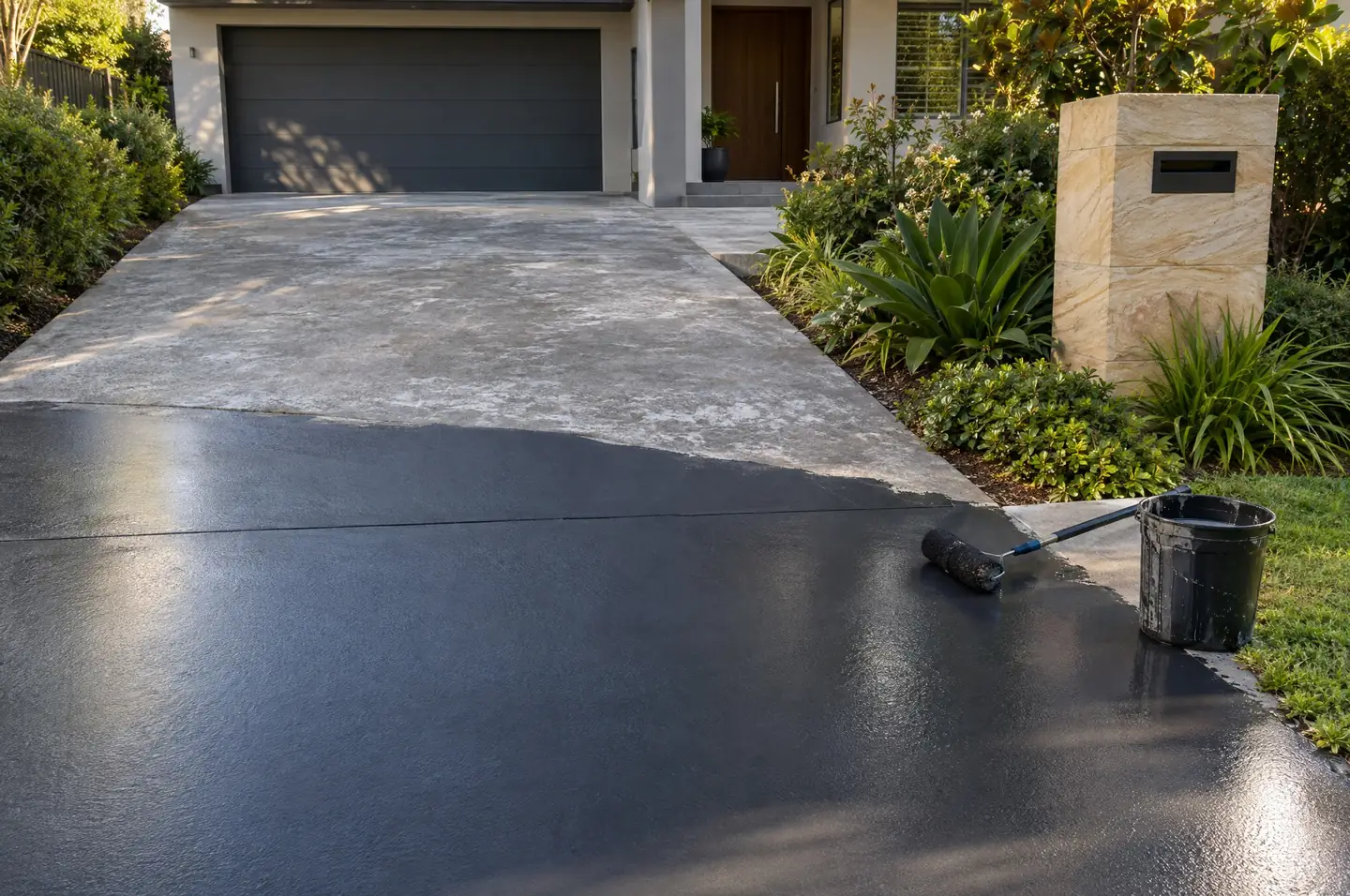
Driveway sealing in Dover Heights
Contemporary rebuilds favour exposed aggregate and large-format pavers for driveways, with travertine, limestone or sandstone around pools and terraces; post-war houses have plain or coloured concrete, often cracked and patched. Slopes are common, so tyres scuff the same strip of surface every day. Salt from spray dries into the surface and, with wet and dry cycles, lifts the finish; coloured concrete fades in full sun; and pool coping takes salt-chlorinated splash. Oil drips, rust from steel furniture and leaf tannin add stains. A clean and seal restores colour and makes salt and stains sit on the surface instead of soaking in, which is the whole point on the clifftop.
A vetted tradie pressure cleans concrete and aggregate, degreases oil, treats algae on the shaded side, and lets the slab dry completely before sealing on a calm, dry day, because wind carries spray onto fresh sealer and salt onto clean stone. Exposed aggregate and coloured concrete usually take a penetrating or acrylic sealer; limestone and travertine take a breathable impregnator and never acid. On a steep driveway the sealer goes on in sections with an anti-slip additive. Rinse water, degreaser and etch are captured or diverted to garden, never to the street pit or over the cliff, under NSW stormwater law and plain good sense.
Post the job with the surface type, approximate area, the slope and a photo, and whether a car must stay accessible. Vetted tradies who seal driveways along the cliff line take it up and, once they have seen the surface, put a written quote under their own ABN to you. The quote should set out the cleaning, the sealer, the finish and the curing time before foot and vehicle traffic. Homeowners pay nothing and are under no obligation. Weather drives timing here more than anywhere, so expect the tradie to pick a still window and to suggest resealing exposed areas more often than an inland driveway would ever need.
Driveway & concrete sealing services you can post
Frequently asked questions
It should not be if specified properly. Penetrating sealers keep the texture of aggregate and concrete, and film-forming products can carry an anti-slip grit. Ask for a wet-slip rating suited to a steep driveway in the quote.
Less than inland. Salt, sun and wind wear the surface, so exposed driveways and pool surrounds need checking every year or so and resealing when water stops beading. A fresh-water rinse between visits extends the life.
Yes, but with a different product. Travertine and limestone are calcareous, so they are cleaned without acid and sealed with a breathable impregnator, while the concrete driveway takes its own sealer. One tradie can often quote both.
Sealing needs a dry surface, mild temperatures and little wind for the product to cure. Still winter days can be ideal on the clifftop, while a summer easterly is not. The tradie will set the date around the forecast.