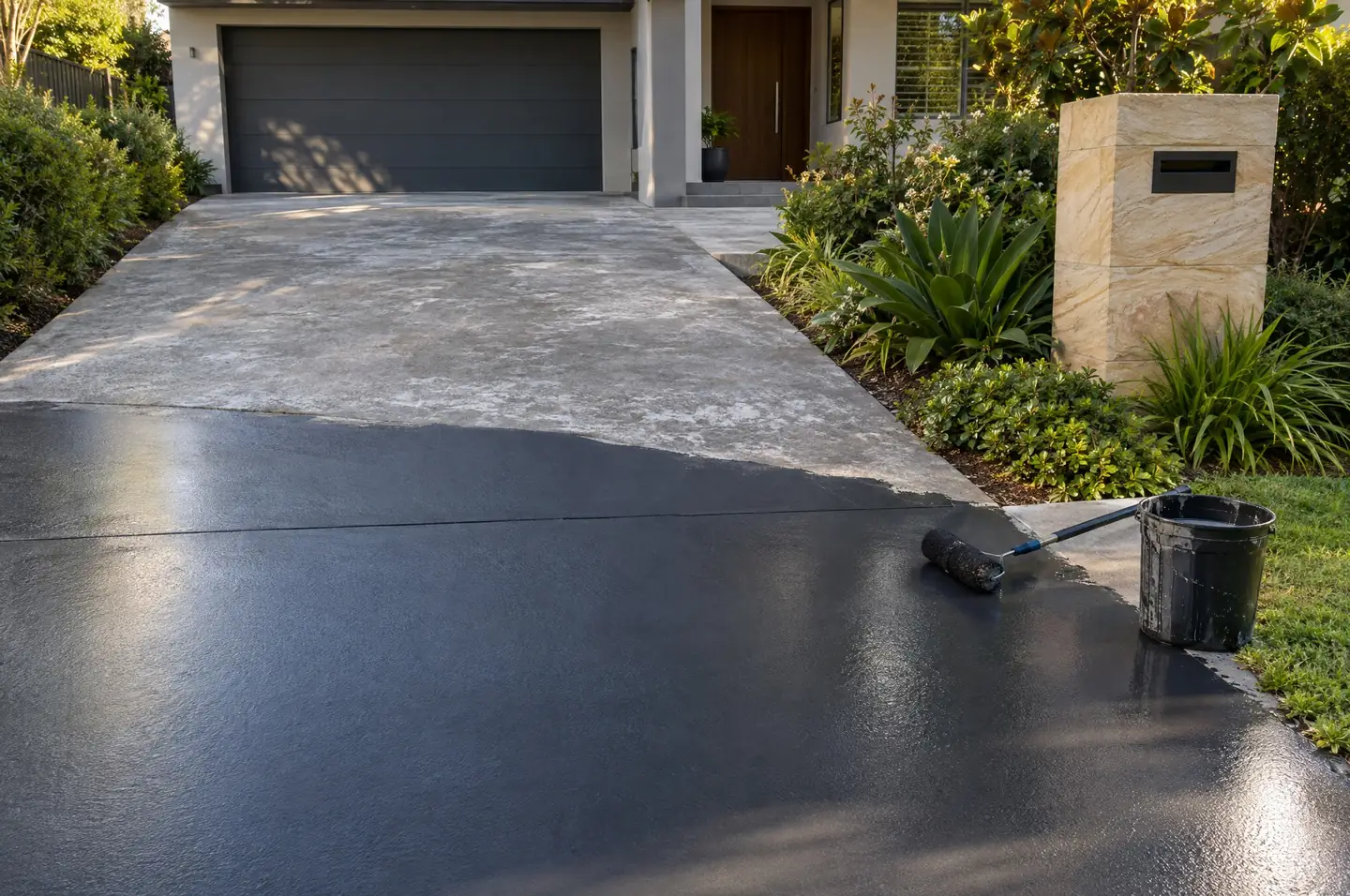
Driveway sealing in Paddington
Hard surfaces in Paddington are small and shaded. A rear-lane garage apron or car space is usually plain concrete or pavers, stained with oil and leaf tannin and green with algae where the lane blocks the sun. Courtyards are laid in pavers, bricks, sandstone flags or tinted concrete, and stay damp enough to become slippery. Front paths and steps are often original sandstone. The few terraces with a street-front crossing have coloured or exposed aggregate concrete that fades under traffic film and tyre marks. Sealing after a proper clean keeps stains from soaking in and makes the next clean easier, but the product must suit the material underneath it.
A vetted tradie cleans first, at a pressure the surface can take, lifts oil with a degreaser and treats algae, then lets the surface dry fully before sealing. Pavers and coloured concrete take a penetrating or film-forming sealer chosen for the finish you want; sandstone and other porous stone take a breathable impregnator so moisture can still escape, and stone that draws ground moisture is often better left unsealed. Rinse water, degreaser and any acid etch are captured or sent onto the garden instead of the lane gutter, because NSW stormwater law treats them as pollutants. Where a terrace has been converted to strata, courtyards and lanes can be common property and need the owners corporation's sign-off.
Tell us the surface, its rough area, how it is reached and whether a car needs to come and go, and add a photo. We put it to vetted tradies who seal paving around Paddington, and each quotes in writing, in their own business name, once they have seen the surface. A useful quote sets out the clean, the sealer and the finish, and the drying time before you can walk or park on it. The matching is free and you decide whether to proceed. Lane access matters: if a neighbour's garage shares the apron, let them know, and allow a dry, mild day or two for curing before the car goes back.
Driveway & concrete sealing services you can post
Frequently asked questions
Often yes, with a breathable penetrating sealer once the stone is clean and dry. Sandstone footings or steps that draw moisture from the ground are usually left unsealed, because trapping salts behind a sealer can make them flake. The tradie should test a patch first.
The apron may be partly shared, and it will be closed to cars while the sealer cures. Tell the neighbours the day and the curing time, and check with your strata manager if the lane or courtyard is common property.
Product and weather decide it, so the quote should give a figure. Foot traffic usually comes first and vehicles later, and shaded Paddington surfaces dry slower than open driveways, so a run of dry days is ideal.
A penetrating sealer leaves the texture as it is, and a film-forming sealer can be ordered with an anti-slip additive. Since courtyards here stay damp, ask for a finish rated for wet areas rather than a high-gloss coat.