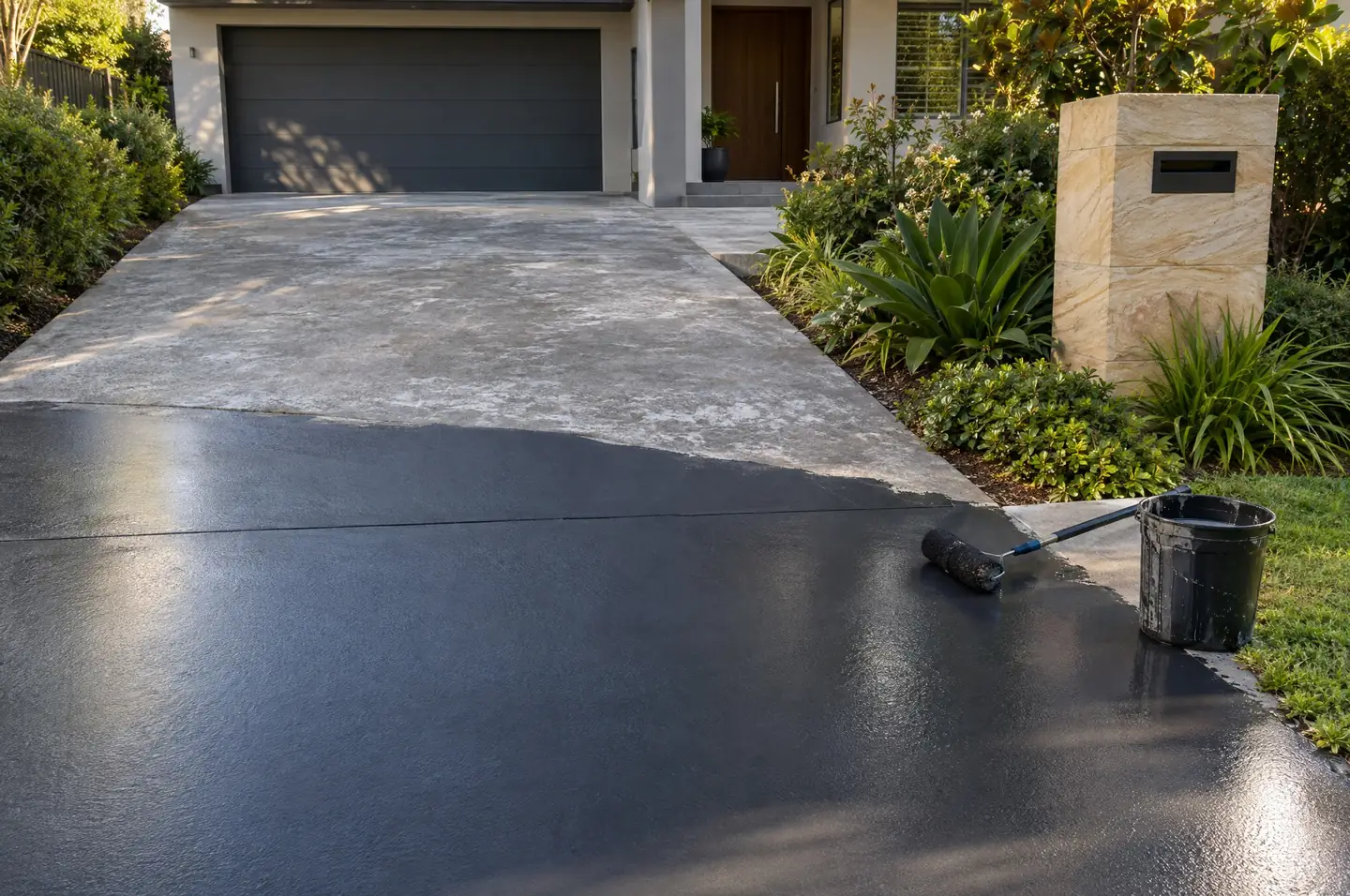
Driveway sealing in Hunters Hill
Driveways and paths in Hunters Hill come in every era. Old cottages have gravel or brick drives and sandstone-flagged paths that fig roots lift; Federation and interwar houses have concrete strips and tessellated verandah tiles; the larger modern homes near Woolwich and along the river have exposed aggregate, coloured concrete and sandstone paving on forecourts. Shade from established trees, river damp and leaf tannin from figs, jacarandas and camphor laurels mean algae in the wheel tracks, dark biofilm on stone and purple-brown stains after every flowering. A proper clean and the right sealer restore colour, bind aggregate, slow staining and make stone paths safer underfoot without making them look new.
A vetted tradie starts with a rotary surface clean and a degreaser, treats biofilm and moss with a biocide, and lets the surface dry fully, which can take days between stone walls that hold moisture. Concrete and aggregate are sealed in thin coats with an anti-slip additive on anything that slopes toward the river; sandstone and tessellated tiles get a breathable penetrating sealer that keeps the natural finish the conservation area expects, never a glossy film. Run-off is bunded at the low end and diverted to lawn or captured so detergent and sediment do not reach the drains that feed the Lane Cove and Parramatta rivers. Work on the council verge keeps the footpath clear and safe.
Post photos of the driveway and paths, the surface types, an approximate area and the main problems, whether staining, flaking, loose stones or slipperiness. Vetted, independent tradies who seal and restore driveways around Hunters Hill, Lane Cove and Ryde are matched to the job; they arrange a visit with you and put the quote in writing, and it should spell out how each surface is cleaned, which sealer goes on stone and which on concrete, coats, anti-slip, drying times before cars and feet, and how water is managed. Several dry days are needed, and narrow streets mean the tradie will ask where to park.
Driveway & concrete sealing services you can post
Frequently asked questions
Only with a breathable, penetrating product, applied after a gentle clean. It slows the biofilm that makes stone slippery and keeps the natural look expected in the conservation area. Never a film-forming sealer, which traps moisture and flakes the stone.
Not with the lifting. A stonemason or paver can relay the flags on a stable bed, and then cleaning and sealing protect the surface. Root work near a protected tree should be checked with Hunter's Hill Council first.
Fresh stains yes, old ones mostly. After sealing, the flowers rinse off before they bind to the surface, which is why many owners seal in winter before the next flowering.
Sealing an existing surface in the same look is routine maintenance and generally needs no consent, while changing the colour or material of a street-facing driveway inside the conservation area may; check with council if the plan goes beyond sealing.