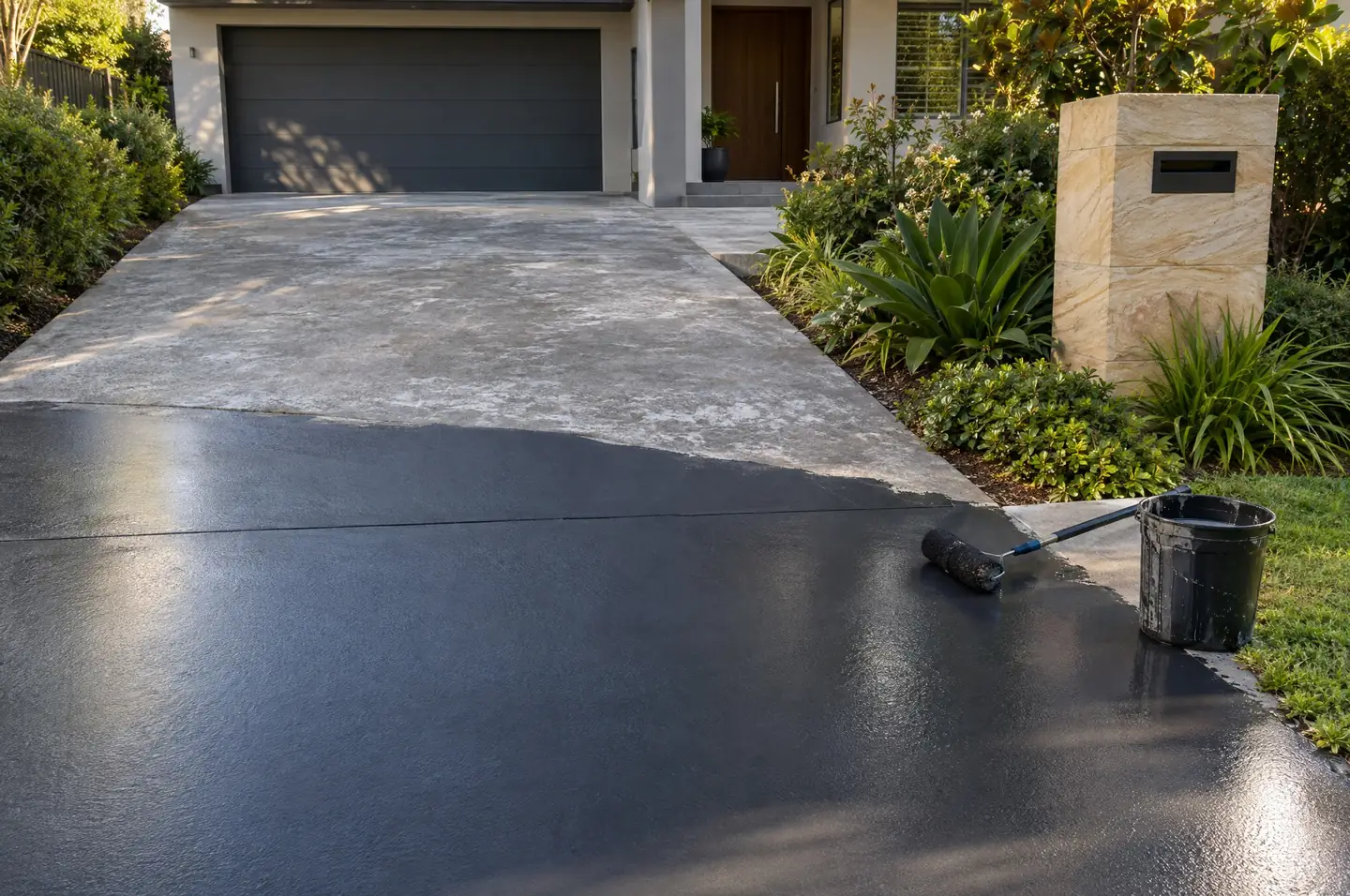
Driveway sealing in St Ives
Older St Ives homes often keep their original plain concrete driveway, now cracked by tree roots, darkened by tannin and spotted with moss where the carport shades it. Rebuilds have exposed aggregate or coloured concrete, which fade and blotch without a sealer, and many properties have paved pool surrounds, courtyards and paths in clay pavers, sandstone or travertine. Sloping blocks running down to the valleys put driveways on a grade where algae makes them slippery after rain. Sealing protects the colour and finish, slows oil and leaf staining, and holds joint sand in pavers; on pool surrounds a penetrating sealer adds resistance to chlorinated water and salt.
First comes the clean, usually a pressure washer plus a treatment for moss and algae, after which the vetted tradie repairs cracks, treats efflorescence and lets the slab dry, which takes longer under tree cover. The sealer suits the surface: a breathable penetrating product for sandstone, travertine and dense pavers, a film-forming acrylic or polyurethane for coloured concrete and exposed aggregate, with a grit additive on slopes. Rinse water carries silt and residue, so it is contained or run onto turf instead of down the gutter, in line with NSW stormwater rules. If the whole job tops $5,000 with materials, a licensed contractor and written contract are required; most sealing jobs are smaller.
Give the surface type, rough dimensions, slope, shade and photos of any damage when you post the job, and say whether the pool area or paths are included. Vetted tradies sealing concrete and paving across St Ives quote directly, generally after seeing the surface. The quote should list prep, repairs, the sealer and how many coats, when cars can return, and the run-off arrangements. Townhouse owners should raise shared driveways with the strata manager, since they are usually common property. Posting is free for homeowners, and no quote has to be accepted.
Driveway & concrete sealing services you can post
Frequently asked questions
If the slab is sound, cracks can be filled and the surface cleaned and sealed, which improves the look and slows further damage. If it is heaving from roots or breaking up, the tradie will tell you sealing is not worth it.
Not if the right product is used. A penetrating sealer leaves the surface texture unchanged, while a film sealer can be dosed with grit. Say the paving is around a pool when you post.
The surface needs to be dry through, not just on top, which under trees can mean two or three dry days. The tradie checks moisture before sealing and will reschedule rather than seal damp concrete.
It makes them easier to remove and slows them, but wet leaves left for weeks will still mark a sealed surface. Sweeping in autumn makes the biggest difference.