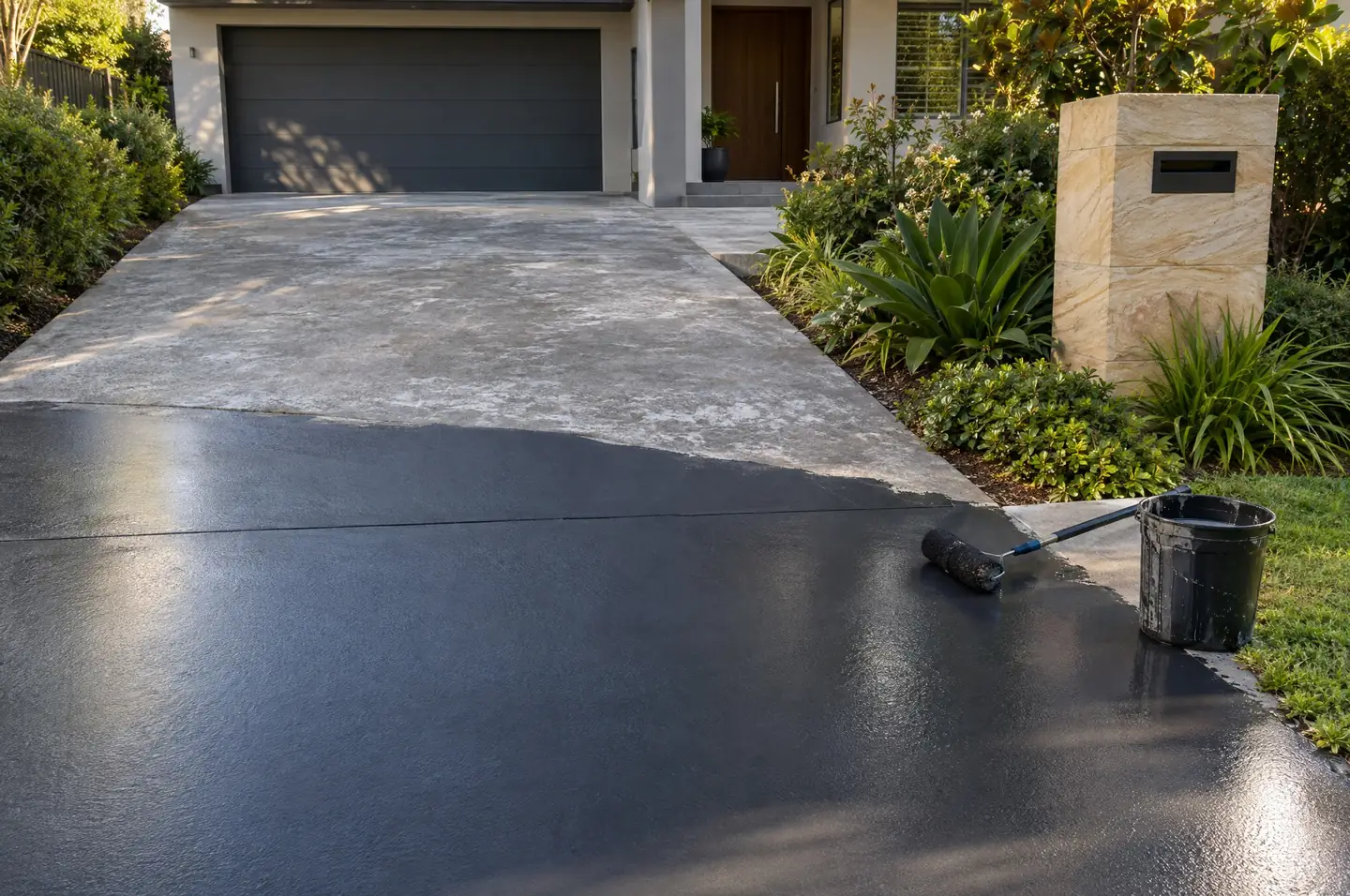
Driveway sealing in Avalon Beach
Few Avalon driveways are flat. Concrete, exposed aggregate and paved drives climb or drop from the street to houses on the hillside estates off Plateau Road and Central Road, and the sections under the canopy hold moss and algae through winter. Leaf litter stains the surface with tannin wherever it lies wet, and gum nuts and bark collect at the bottom of the slope. Sandstone paths, steps and retaining walls between levels grow lichen and black mould. Near the beach and headlands, salt efflorescence and sand abrasion join in. Coloured concrete fades on the open sections and stays dark under the trees, so one driveway can look like two.
A vetted tradie pressure cleans the drive, treats growth with a biocide, lifts tannin and oil stains, and waits for the slab to dry, which under the trees can take longer than the clean itself. On gradients the sealer is chosen for grip: penetrating products or a film sealer with non-slip additive. Exposed aggregate and pavers get a sealer matched to the stone, and sandstone a breathable impregnator that does not trap moisture. Because run-off on a slope heads straight for the gutter and then the beach or Careel Bay, the tradie bunds the kerb and directs water onto garden beds. On a shared drive, the neighbours agree the day.
Send photos from the street and from the house, a rough length, the surface type and whether the drive is shared or in deep shade, and the job goes to vetted, independent tradies who seal driveways and sandstone across the upper peninsula. They contact you and quote directly; the homeowner pays no fee and takes on no obligation. Look for the type of sealer and its finish, how many coats, cure time before cars return, treatment of stains and growth, and how run-off is managed. In Avalon the quote may suggest a leaf-clearing routine too, since sealing works best on a surface that is swept.
Driveway & concrete sealing services you can post
Frequently asked questions
It makes them far easier to rinse off, because the tannin sits on the sealer rather than soaking into the concrete or sandstone. Leaves left to rot in a wet pile can still mark, so an occasional sweep helps.
Yes, with a breathable impregnating sealer made for sandstone, applied after the stone is cleaned and fully dry. Film-forming sealers are avoided on sandstone because they trap moisture and peel.
Longer than a sunny one, sometimes a few days after cleaning in winter. The tradie may clean on one visit and seal on another so moisture is not trapped under the coat.
With the right product, yes. Ask for a non-slip finish and the quote will specify a penetrating sealer or a grit additive. A glossy film on a steep wet drive is the thing to avoid.