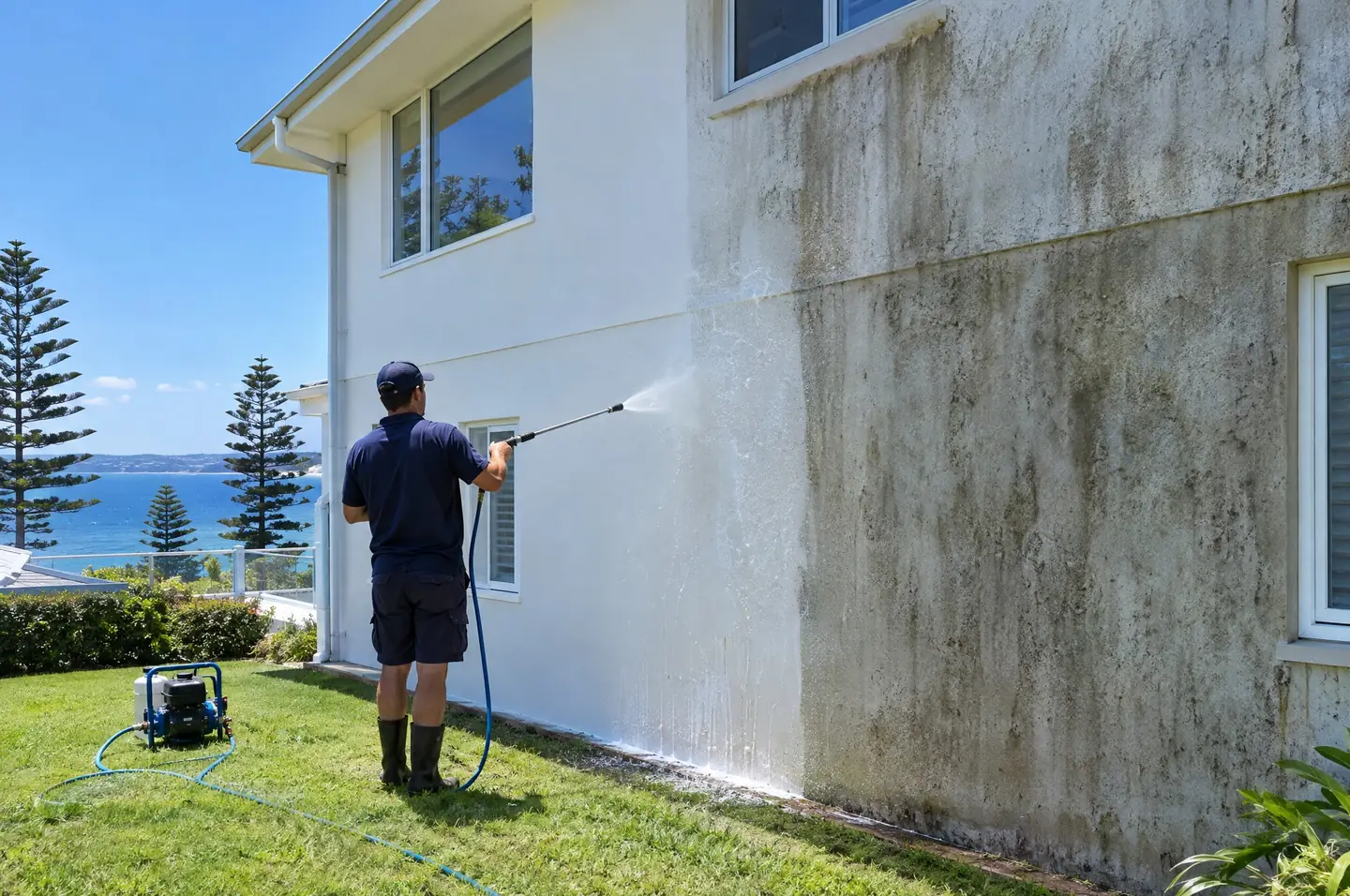
House washing in Watsons Bay
A Watsons Bay house wash is usually a single-storey or two-storey cottage in painted weatherboard or render, with a galvanised or tiled roof, timber verandah, sandstone footings and a garden wall of old stone. Salt haze dulls paint on the ocean and harbour sides, and lichen and mould darken the southern walls under figs and pines. Gutters hold needles and leaves, roofs on the exposed side carry salt crust and the shaded pitch grows moss. Newer houses and the apartment blocks near the wharf are rendered masonry with glass balustrades, which salt treats the same way. Fibro sheds and eaves on older properties call for caution before any hose comes out.
A vetted exterior cleaner washes at low pressure with mild, biodegradable products, using a longer dwell time rather than more force, because salt-weakened paint, old render and historic sandstone strip easily. Sandstone is never pressure washed or acid cleaned. Where asbestos cement is suspected on a pre-1990 cottage, the tradie stops and advises. Roof and gutter work uses fall controls under WHS rules, often a harness anchor on a low cottage roof. Run-off goes onto garden beds or is captured and taken away, because the street drains here empty into the harbour beside Sydney Harbour National Park, and NSW law bans detergent, paint flakes and sediment from stormwater.
Post the job with a photo of each elevation, the roof type and any sandstone, and vetted tradies who already wash houses in Watsons Bay and Vaucluse will respond. They visit, usually on a weekday to avoid the weekend crowds near Camp Cove, and hand over a written quote in their own name, setting out the method for each surface and the plan for wash water. No fee to the homeowner, no obligation to proceed. Expect gear to be carried along a side path on narrow lots, and if the cottage is a holiday home, access through a neighbour or manager can be arranged. Anything beyond cleaning in the conservation area is a council question first.
Exterior cleaning services you can post
Frequently asked questions
Not safely. High pressure drives water behind boards, lifts old paint and can expose older lead-based coats. A soft wash at low pressure with a mild cleaner and a rinse is the right method, and loose paint is a repainting matter rather than a washing one.
Not if they are left to a gentle method: dry brushing salt, a mild stone-safe product and a low-pressure rinse. The house washer should keep the jet well away from them, and if the stone is crumbling, suggest a conservation stonemason rather than washing harder.
With a fresh-water rinse and a soft wash from a harness or anchor point, not a high-pressure blast that drives water under the laps. Rusted galvanised sheets are reported rather than scrubbed, since cleaning will not fix them.
It raises the stakes for run-off. Drains near South Head discharge to the harbour and foreshore, so wash water is diverted to garden or captured. Nothing else changes, but a vetted tradie here plans run-off before the first hose is unrolled.