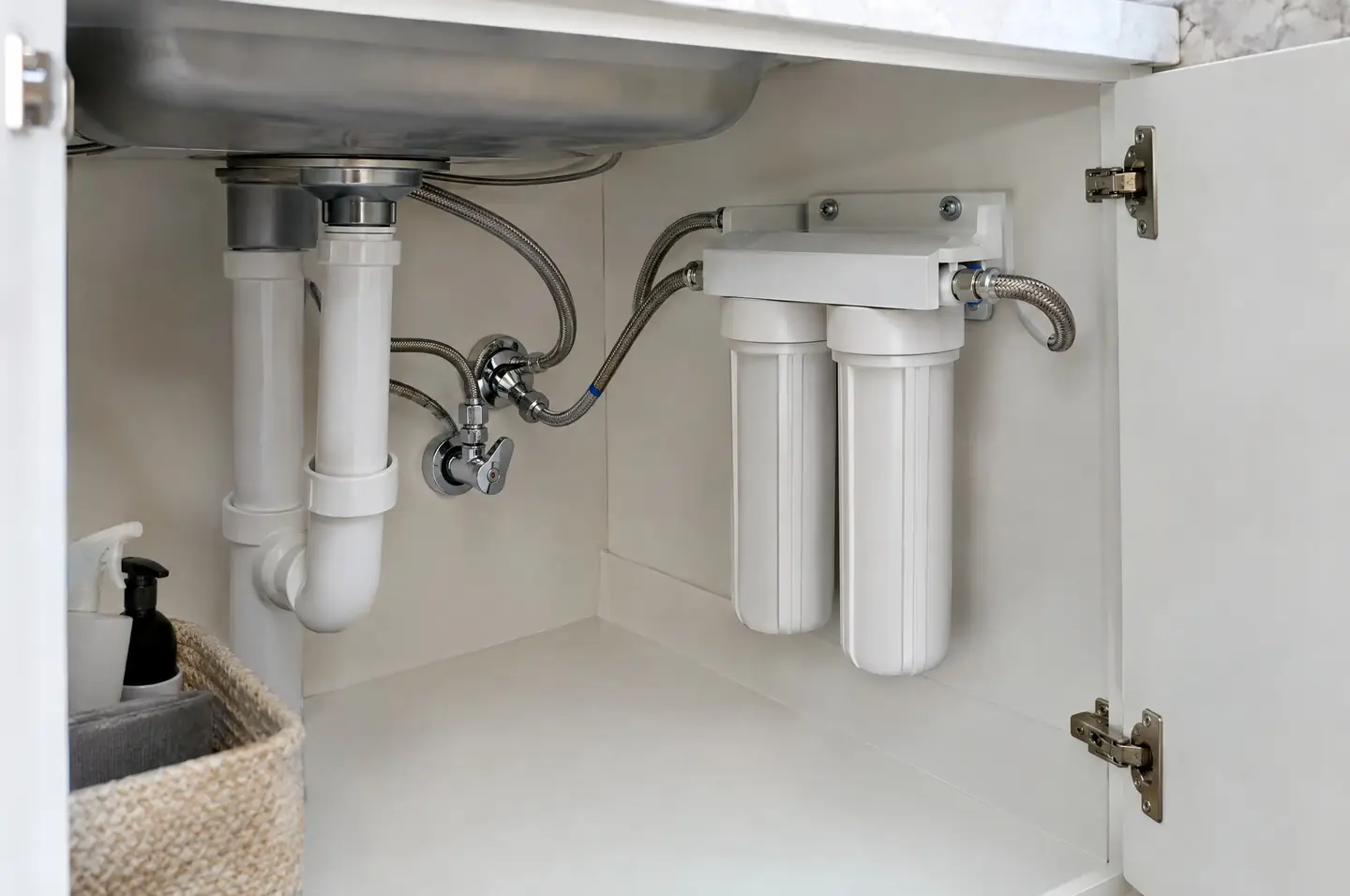
About under-sink & drinking water filters
Most under-sink systems run two or three cartridges in a row: a sediment stage, then a carbon block, which is fine carbon bonded into a solid cylinder so water cannot channel around it. Carbon block cartridges can be certified for more than taste. NSF/ANSI 42 covers aesthetic claims such as chlorine and odour, NSF/ANSI 53 covers substances with a health effect such as lead, and NSF/ANSI 401 covers emerging compounds. The filtered water arrives through a small dedicated tap or a three-way mixer with its own filtered waterway. It is the sensible first step for most households, and often the last one they need.
Kitchens in these suburbs bring their own details. Stone benchtops in renovated Bellevue Hill and Balgowlah Heights homes need a stonemason's core drill for a new tap hole, which the plumber should flag before quoting. Terraces from the Victorian and Federation eras in Paddington and Woollahra can still have old brass fittings, so a cartridge with a certified lead-reduction claim is worth asking about. Where your delivery system carries chloramine, a catalytic carbon block is the right choice. Apartment kitchens in Kirribilli or Coogee are usually inside the lot, so no strata approval is needed unless the plumber touches shared pipework.
Because the system connects to the cold water supply, installing it is plumbing work. NSW licenses plumbing at any value, so a handyman cannot legally plumb a filter in, and every housing, tap and connector must be WaterMark certified. Since 2021 the Australian standard for drinking water treatment units, AS 3497, has required performance claims to be certified to the NSF/ANSI standards, which makes marketing percentages easy to check. We verify each plumber's licence class, ABN, insurance certificate and recent local jobs before they see your request, and they quote and contract with you directly.

What the job usually includes
How it works
- Tell us the jobSend a photo of the inside of the sink cupboard and of the benchtop around the tap, and say whether the bench is stone, laminate or timber. Tell us what you want the filter to do and whether you prefer a separate tap or a three-way mixer.
- We match vetted local plumbersYour request goes to licensed plumbers in the network who work in your suburb and install drinking water systems regularly. We have checked their licence on the NSW public register, their ABN, their public liability cover and photos of recent kitchens.
- They quote you directly in writingEach plumber quotes under their own licence and ABN, listing the housings, cartridges and tap by name so you can check the WaterMark and NSF/ANSI listings yourself. If a stonemason is needed for a tap hole, that should appear as a separate line.
- The installationThe plumber isolates the cold supply, fits an isolation valve, mounts the housings where you can reach them for cartridge changes, connects the tap and flushes the carbon to the manufacturer's instructions. Every joint is pressure tested, filtered and unfiltered water are checked at the right handles, and the cupboard is wiped dry.
- After the jobCheck for drips over the first few days, keep the cartridge details with your kitchen paperwork and set a reminder for the change date. Then tell us how the plumber did. Your feedback decides whether they keep receiving matches.
Certified claims, a reachable cupboard and separate waterways
Good under-sink work starts with reading the certification rather than the box. A careful plumber recommends the cartridge whose listed claims match your goal at a stated capacity in litres, and explains that a claim for chlorine is not a claim for chloramine or lead. They match the tap to the system too: a three-way mixer must carry filtered water through its own waterway to the spout, or the filter is wasted on the first glass. Cheap mixers that blend streams, or filtered lines teed into the hot side, are the mistakes to look for.
The second mark of quality is how the cupboard is left. Housings should hang on a bracket where the wrench can turn, not wedged behind the bin, with an isolation valve you can reach without emptying the cupboard. Braided hoses should be WaterMark marked and not kinked around the waste. The plumber should run the tap long enough to flush carbon fines, test for leaks under pressure rather than eyeballing, and leave the cartridge part numbers on the housing. Ask to see the install before they pack up; a tidy cupboard is usually a tidy job.
Questions worth asking the tradie
Frequently asked questions
In NSW, yes. Connecting anything to the cold water supply is plumbing, which is licensed regardless of the value of the job, and the parts must be WaterMark certified. A licensed plumber also knows the pressure and backflow rules in AS/NZS 3500. Changing a cartridge later in the existing housing is maintenance you can do yourself.
No. Sediment and carbon cartridges leave fluoride in the water. Reverse osmosis is the household technology that reduces it, and fluoridation of Sydney's supply is NSW Health policy. If fluoride is your reason for filtering, say so in your job post and the plumber can quote RO instead.
It filters at full mains flow through larger cartridges with certified claims you can check, and it is out of sight. A jug suits renters and small households. Neither is a safety device on Sydney mains water, which already meets the drinking water guidelines; the difference is taste, convenience and what the cartridge is certified to do.
Yes. A small dedicated filter tap can sit beside it, using a spare hole or a new one. In stone, a new hole is a stonemason's job with a core drill, so ask the plumber how they handle that. If you are renovating, a three-way mixer keeps the bench to one tap.
A standard kitchen with an existing tap hole is usually done in a visit of a few hours, including flushing and pressure testing. Add time if a stone bench needs drilling or old stop valves have to be replaced. The plumber will give you a realistic window when they quote.
Usually not, because the work is inside your lot and does not change common property. If the plumber needs to shut down a riser or alter shared pipework, the strata manager should be told first. Say that the home is strata when posting the job so access can be planned.