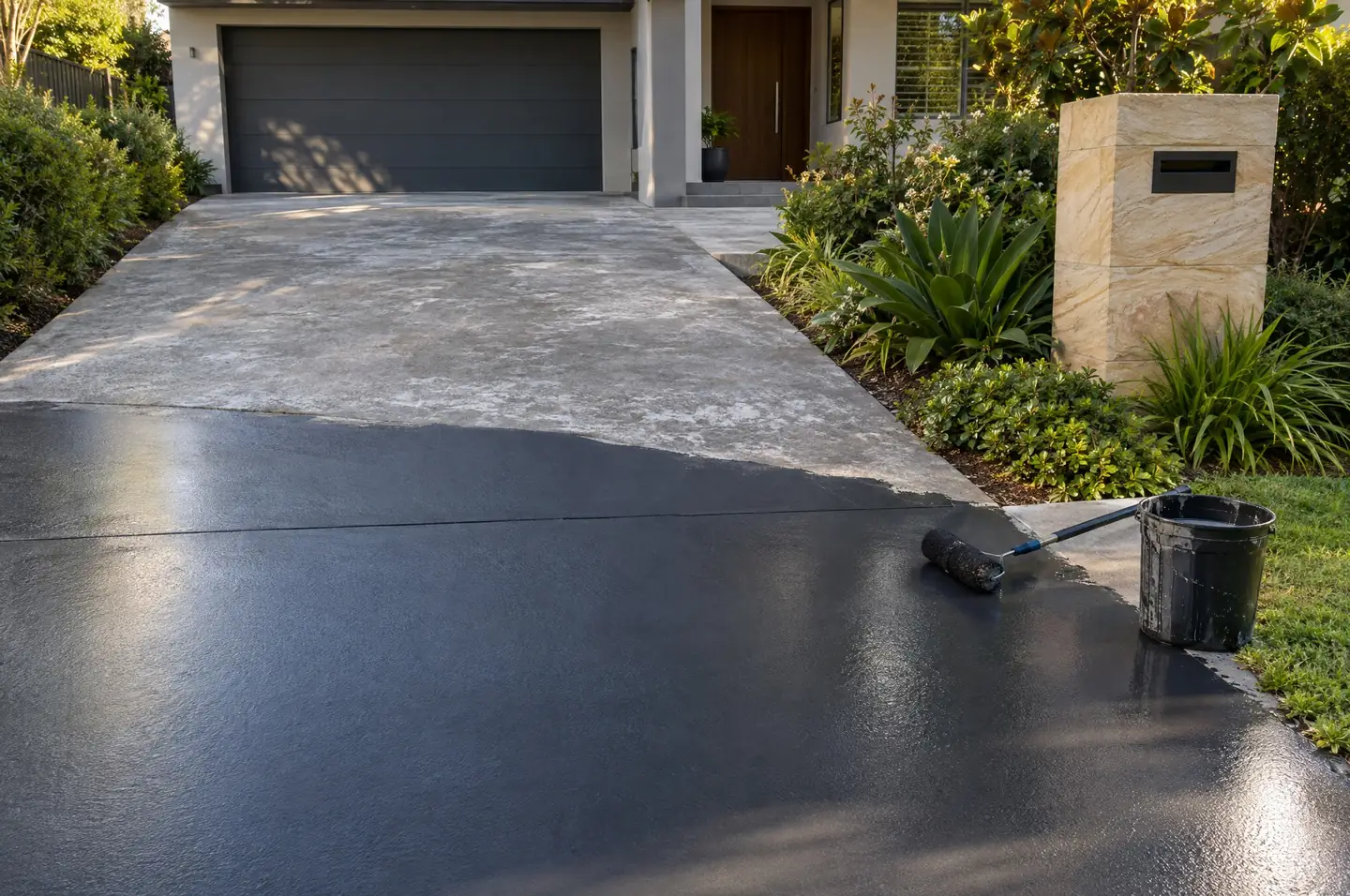
Driveway sealing in Balgowlah Heights
Driveways in Balgowlah Heights often run the full depth of the lot, dropping toward a garage beneath the house or climbing to a carport on the ridge. Exposed aggregate, the finish of choice on rebuilds from the 1990s onward, loses stones at the turning point and goes dull, coloured concrete fades under the harbour light, and clay pavers and sandstone pick up tannin from overhanging angophoras and gums. The shaded, tree-side edge grows moss and becomes dangerous in rain, and efflorescence appears where ground water from the terraces above wicks through. Sealing closes the surface against oil, salt and tannin, restores depth of colour and, with grit in the coat, keeps traction on the gradient.
The vetted tradie begins by pressure cleaning and treating moss and oil, using lower pressure on sandstone. On a slope the water heads straight for the street pit and on to the harbour, or into the bush at the bottom of the block, so the tradie bunds the low end and recovers or diverts it onto lawn. Drying under the canopy takes longer, so cleaning and coating are often separate visits. Acrylic or polyurethane coatings bind exposed aggregate and revive coloured concrete, penetrating sealers suit pavers and stone, and an anti-slip additive goes into every coat on a gradient. Where a battle-axe drive is shared, the neighbours or the owners corporation agree the job first.
Post the surface, how far it runs and how steeply, whether the drive is shared and where cars will go while it cures, with photos of the moss, the fading and any loose aggregate. Vetted sealing tradies who already work Balgowlah Heights and Seaforth see it first; the one who takes it on writes to you directly, setting out product, coats, grip additive and closure period. Long drives can often be sealed in halves so one track stays open. You pay nothing to be matched, and saying no is fine. Sealing needs dry days before and after, and leaf fall onto wet sealer is a real risk here, so timing is discussed.
Driveway & concrete sealing services you can post
Frequently asked questions
They can if they land on a wet coat, which is why tradies under heavy canopy blow the drive clear, seal in sections and pick a still morning. Fast-curing products help. Once the sealer has cured, leaves and tannin wash off far more easily than from an unsealed surface.
A clear acrylic or polyurethane coating binds the surface and slows further loss, and brings back the wet look. Where stones are already missing in patches, the tradie will recommend patching or resurfacing those areas first, then sealing the whole drive so the finish is even.
Longer than a sunny one. Expect a day or more after cleaning before sealing, and a day or two after the final coat before cars return, extended in cool or damp weather. Tell the tradie where cars can go in the meantime when you post the job.
Not into the bush and not into the street pit. The tradie bunds the low end, diverts the water onto lawn or garden beds or vacuums it up, because letting sediment and cleaning agents reach stormwater or the national park is an offence in NSW.