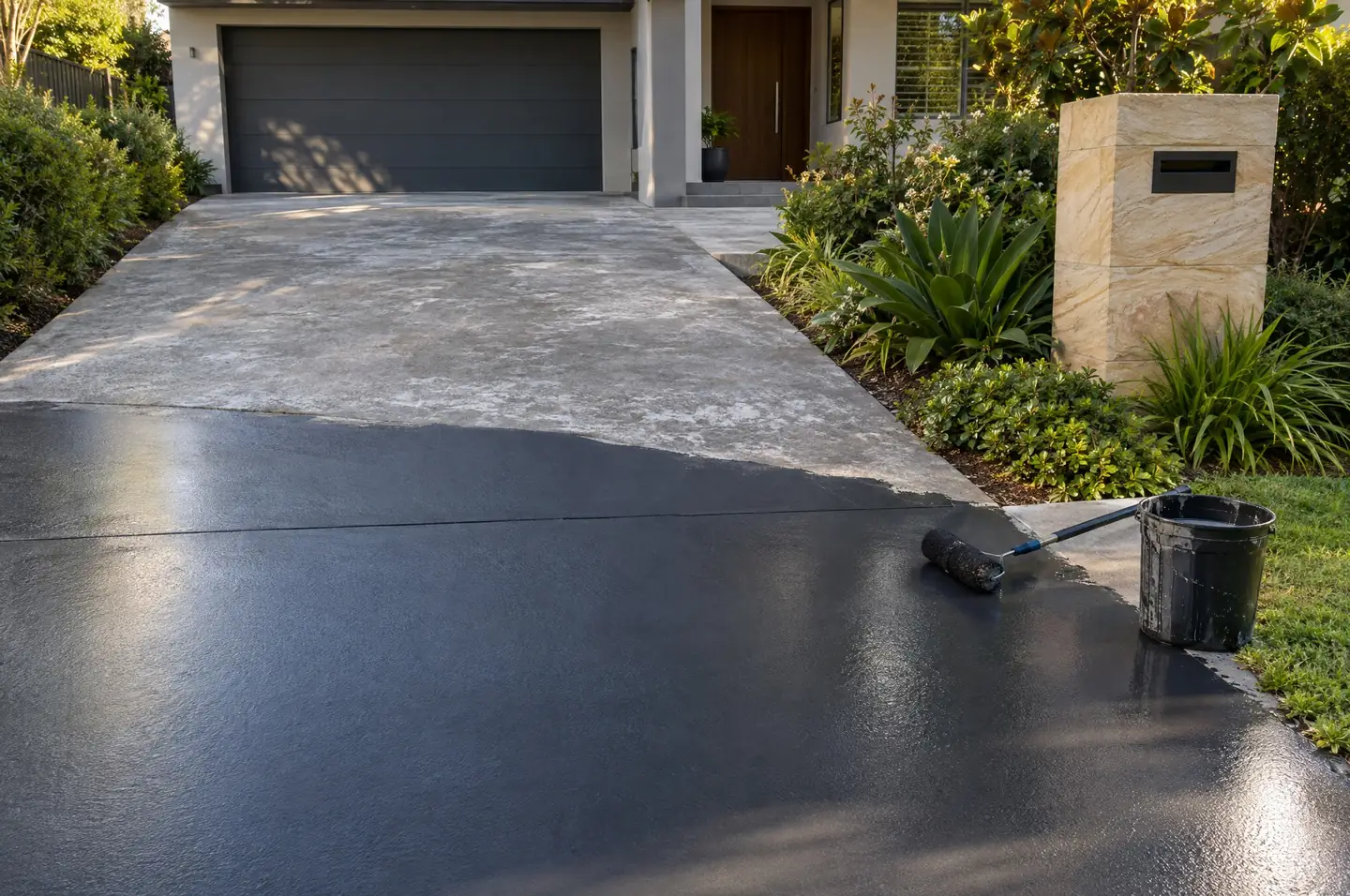
Driveway sealing in Seaforth
Many Seaforth driveways drop or climb sharply from the street, so they were poured in exposed aggregate or broomed coloured concrete for traction, with pavers or sandstone on the flatter entry courts. The problems follow the setting. Tannin from gum leaves and bark leaves brown shadows on pale aggregate. The shaded lower run grows moss and algae and turns slippery when wet. Hot tyres mark dark coloured concrete on the turn into the garage. An old film-forming sealer peels in patches where it went on too thick. A clean and reseal every few years keeps the surface easy to wash and stops stains soaking into the matrix.
A vetted tradie pressure cleans the driveway first, treats moss and oil, and waits until the slab has dried right out before sealing, which on a shaded south-facing drive can take several dry days. On a slope they will usually recommend a penetrating sealer or a film sealer with an anti-slip additive, because a glossy coat on a steep drive is a hazard. Pre-1990 fibro fences or garage walls beside the drive are not pressure washed. Wash water carrying detergent, moss killer or old sealer is captured or diverted to a garden rather than the street gutter; the stormwater here runs to Middle Harbour and NSW pollution law treats contaminating it as an offence.
Include a photo of the full length of the drive from the street, a close-up of the surface and a note about the gradient. Sealing specialists in the network who cover Seaforth get the job and deal with you direct on the quote. It should name the sealer type and finish, how many coats go on, how the surface will be prepared, how long you need to keep cars off, and how wash water will be handled. If you have an exposed-aggregate drive, ask whether the quote includes re-exposing dull patches. You compare quotes and pick; it costs homeowners nothing to use the service.
Driveway & concrete sealing services you can post
Frequently asked questions
With the wrong product, yes. Ask for a penetrating sealer, which does not change the surface texture, or a film sealer with a grit additive. On a Seaforth gradient, a vetted tradie should bring this up before you do.
Fresh tannin marks lift with a clean and the right treatment; older stains fade rather than vanish. Sealing afterwards stops new leaves from staining as deeply. Clearing leaves after storms makes the biggest difference.
Dry, mild weather with a few clear days in a row. Spring and autumn suit most drives; a shaded block may need a longer dry spell than a sunny one. Avoid sealing just before a southerly change.
Often, if the surfaces suit the same product. Sandstone and travertine need different sealers from concrete, so list each surface in your post so the tradie quotes correctly.